Education - Full Report
19 November 2025
written by Vesa Hautala

Introduction
This report explores education in low-and middle-income countries (LMICs) as a cause area with a focus on identifying the most impactful interventions. For reasons similar to the problem areas of poverty and disease, I expect the most impactful interventions to be in countries where the quality of education tends to be much lower than in high-income countries. However, I have not made a thorough investigation of education interventions in the UK and the US, so I cannot speak on their effectiveness.
This report includes:
an overview of the problem of insufficient or low-quality education from a global perspective
a review of the benefits of education
information on the most effective interventions for improving education
How to read this report
The first half of this report presents a lot of academic research. This includes the sections What is the problem, The benefits of education and Highly effective interventions. Additional details, further discussion, and the underlying sources can be found in the “More details” sections, which you can click open. You can skip them or skim them if you are less interested in details and discussion of the research or if you are looking for an overview.
What is the problem?

Average learning-adjusted years of schooling, 2020 Source: Our World in Data, data source: World Bank, based on methodology in Filmer et al 2018; World Bank.
According to the World Bank’s estimate for 2022, seven in ten children and young people in low- and middle-income countries (LMICs) were unable to read and understand a simple text by age 10.
The situation is generally the worst in Sub-Saharan Africa and South Asia by metrics like years of schooling, learning outcomes or learning-adjusted years of schooling (LAYS) (see below for more information on these ways of measuring education).
-
Afghanistan and several countries in Sub-Saharan Africa have literacy rates under 50%.
Measured by LAYS, Mali, Niger, Chad, the Central African Republic and South Sudan fare especially badly. (See the above graph from Our World in Data for this and the following bullets)
Kenya is a positive exception with learning outcomes and learning-adjusted years of schooling comparable to some Eastern European countries.
Outside Africa and South Asia, Iraq and Yemen fare especially poorly in terms of LAYS.
Low quality of education
‘A, la, ga … ala-ga … alag’
After a little struggle, the young teenager was excited to read a three-letter word in his very first session with us. We were conducting a diagnostic test to determine his reading level before starting the lessons. He knew most of his letters but struggled to join them into words.
‘Did you go to school at all when you were younger?’, we inquire.
Shadab is taken aback. ‘I am in school now,’ he responds. ‘Grade 6. I got back from school an hour ago.’
(Disruptive Literacy: A Roadmap for Urgent Global Action p. 16)
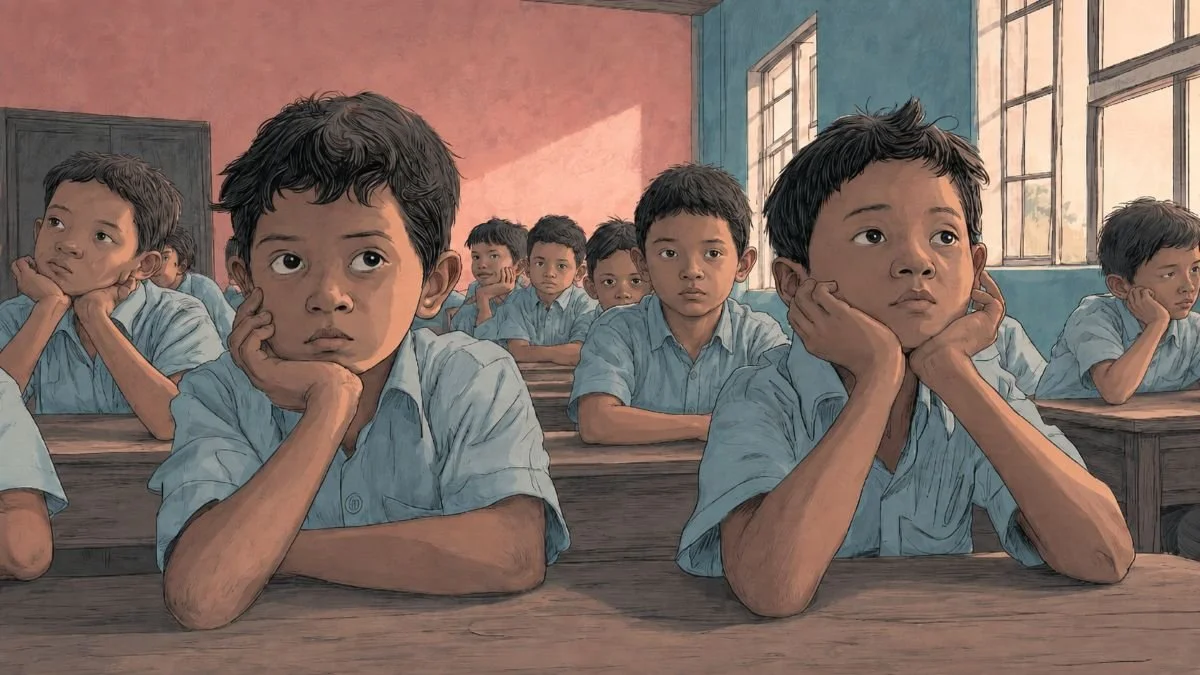
Often, even in cases where kids are in school in LMICs, they do not learn all that much. Lauren Gilbert, a research fellow at Open Philanthropy, offers some numbers in an article she wrote:
Somewhere between 70-80% of children in primary school in a low-income country cannot read a simple story. More than half will still be unable to read by age 10. In a sample of 51 developing countries, about half of women will leave school unable to decode a sentence like “parents love their children.” In some countries, it is substantially worse: 75% of children in second grade in Malawi aren’t able to recognize the local word for “mother” and less than 10% of young women in Nigeria or Sierra Leone can read a sentence like “farming is hard work.”
To really illustrate the scale of the problem, this means that over 50 million primary school students (grade 1–8) in India alone cannot read, write or do basic arithmetic.
In her article, Gilbert goes on to list reasons for bad learning outcomes (quotes from the article):
Teaching in a language the kids don’t know well (English, French), and often the teachers don’t know the language well either
Rigid curricula and pedagogy: “few students are at ‘grade level,’ but teachers are still instructed to teach as if they are.”
Suboptimal pedagogical practices: “Instruction consists largely of memorization. Rather than foster critical thinking, teachers effectively train students’ ability to repeat back what the teacher wants to hear.”
Teacher absenteeism: about one in four teachers were absent in rural India on any given day.
Student absenteeism: “In Kenya, one in ten students skips school on any given day; in India, it’s one in three; in Mozambique, it’s over half.”
Big class sizes – an expert reported there could be 70 kids in a class in Uganda.
Lack of air conditioning
A few points specific to India based on expert feedback I received while creating this report (see chapter 2 of the book Disruptive Literacy for more discussion on these):
Teachers are often overburdened with administrative work. This includes conducting surveys, elections, and public health duties.
The job security of government teachers is very high, i.e. it is very hard to fire them. This can lead to complacency and lack of accountability which reflects on teacher attendance and motivation. See also Pritchett & Murgai 2006.
The large class divide between government school teachers and the students’ families exacerbates problems. The parents of students tend to be poorer, less educated, and lower caste than the teachers. As a result, they often cannot hold the school accountable for the quality of education.
Foundational literacy and numeracy are often not the priority of officials making decisions about education policy in LMICs. “Socialisation of dutiful citizens” is often more important.
-
Ken Opalo analysed Tanzanian education policy since 1961 in his 2022 paper and his main finding was “learning has not always been the goal of schooling in Tanzania”.
A survey of over 900 senior government officials working on education in 35 low- and middle-income countries (mostly countries in sub-Saharan Africa) provided information about the priorities of officials.
The officials valued a dutiful citizen 50% more than a child achieving foundational literacy.
The officials systematically and sometimes dramatically overestimated how many pupils can read.
Creation of dutiful citizens was not the only goal of the officers: they also valued technical and vocational education and training, and making people complete secondary school.
Lauren Gilbert observes in her previously-mentioned article that a focus on producing dutiful citizens is in line with the historical situation in European and Latin American countries:
“This may sound like an odd set of priorities, but both European and Latin American countries had similar priorities when they expanded their education systems to serve more than a small elite around the turn of the 20th century. The goal was not to produce scientists or entrepreneurs but to inculcate a reliable workforce that would support the state.”
Years of schooling, school enrollment, and gender gaps
-
Children in Niger only receive 1.4 years of schooling on average, while children in Germany receive 14.3 years.
The average for low-income countries is 4.1, and for Sub-Saharan Africa, 6.2. (Unpacking Sustainable Development Goal 4 Education 2030)
Compare these figures with the UN’s Sustainable Development Goal 4.1: “Ensuring that all children and youth have access to a full cycle of 12 years of quality primary/secondary education, of which a minimum of 9 years are to be compulsory, public, and free.” (See Sustainable Developmental Goals Briefing Book 2023 p. 16)
However, significant progress has been made in school access and enrollment rates. National governments and international organisations working in education have focused on this over the past decades. Even in poor regions like Sub-Saharan Africa attendance rates are currently quite high – though this is of course relative: in Sub-Saharan Africa, net enrollment in primary education was 75% in 2009. (See Cox 2024 p. 8 for more.)
Progress has also been made with gender equality in schooling. Global gender parity in primary school enrollment was achieved in 2013.
Despite the progress, problems remain. Boys and girls face different challenges in different countries.
-
Women constitute the majority of people in tertiary education globally and in all other regions, except Sub-Saharan Africa, where the gap to parity in secondary education is also the largest.
In LMICs, a larger proportion of out-of-school children and youth are girls, while in higher-income countries the majority of them are boys.
Boys experience more learning poverty (being unable to read and understand a simple text by age 10) than girls in many countries.
An expert in India suggested that access to education is less of an issue on a global scale these days and problems are more often related to the quality of education. Children may be out of school even if there are nearby government schools. They and their parents know the quality of education there is so poor, or school is so boring for the children, that they feel they are better off as truants or child labourers. (See also Pritchett 2008, pp. 7–9)
The focus of the development sector is moving away from access alone toward the quality of education. Crawford et al 2021 observe:
Foreign aid donors and international organizations supporting education in developing countries have increasingly coalesced around a policy agenda prioritizing foundational learning, measured by test scores in primary school, based on a diagnosis of deficient school quality, and a growing body of empirical evidence about effective interventions to improve quality.
The benefits of education

There is some disagreement about what the benefits of education are because defining and measuring the value of education is generally quite difficult. (See Ambitious Impact’s Research Note What are the returns to education?) Some reasons for this are that the benefits “occur so long after schooling takes place, and because education is correlated with lots of other important traits, such as socioeconomic status, that might be the true cause of the benefit.” (Calvert 2019)
According to Calvert 2019, Commonly proposed benefits include:
increased economic productivity
improved health
reduced crime
improved citizenship
female empowerment
Despite the difficulties in measurement, there is a lot of observational evidence linking education with outcomes like increased income, increased economic productivity on a national level, improved health behaviour, less crime, and reduced infant mortality. Other effects include later marriage and reduced fertility. There are also randomised controlled trials demonstrating many of the benefits.
Ways of measuring education
Years of schooling are one of the simplest ways to measure education. As education quality can differ a lot, this is a very imperfect measure of learning outcomes. However, there may be benefits to education that do not come from academic learning, such as learning social skills or punctuality, and some these might be achieved even if the learning quality is poor.
Standard deviation (SD) improvements in test scores measure how much a student’s performance improves compared to a statistical distribution of learning outcomes.
-
An improvement of one standard deviation is equivalent in size to a student near the middle of the distribution moving from the 50th to the 84th percentile, i.e., a leap in performance comparable to going from a rank of 50/100 to 84/100, where 100 is best. In general, a one-standard deviation gain always represents a large shift relative to peers, even though the exact percentile change depends on where a student starts.
Learning-adjusted years of schooling (LAYS) measures the amount of learning that would be attained by a year of high-quality education (using Singapore as the benchmark of quality). This measure captures differences in education quality.
-
This measure is relatively new: it was introduced by Angrist et al in 2020.
For those familiar with global health and development, it has some similarities to quality-adjusted life years. See here for more on the promises and challenges of LAYS.
Learning poverty / Foundational literacy and numeracy assessments: the World Bank has a measure called “learning poverty” that aggregates the results of tools that measure foundational reading and mathematics skills into a measure that tracks the proportion of children who cannot read a simple, short narrative independently and fluently at the age 10. This measure is entirely outcomes-focused.
Increased individual income
There is evidence from high-quality studies (randomised controlled trials and quasi-experimental studies) for education leading to higher earnings for individuals. Estimates of the effect size vary, but one analysis puts it at around 19% increase in income per one standard deviation increase in test scores.
-
One summary of the evidence can be found in Cox 2024 (p. 21–23).
In a Founders Pledge report, Vadim Albinsky identifies five separate lines of academic literature that point to income gains from increased test scores:
Experimental and quasi-experimental studies on improving classrooms in the US
Experimental and quasi-experimental studies on access to good schools in LMICs
Experimental and quasi-experimental studies on preschool in the US
International cross-sectional regressions of income on individual test scores
Regressions of changes in GDP growth on changes in test scores
The link between more education and increased income mostly rests on quasi-experimental studies. There are only a couple of randomised controlled trials supporting it.
For this reason, charity evaluator GiveWell, known for their high standard of evidence, has not named education interventions among their top recommendations. (See GiveWell’s report on education in developing countries from 2018 here.)
National economic growth
Literature reviews suggest a positive relationship between a country’s level of education and its economic growth, but the evidence for education causing economic growth is complicated.
-
Ambitious Impact (AIM)’s research note on the returns to education mentions the analysis by Cameron & Cameron 2006 as an example; the note looks into several studies on the economic benefits of increased literacy.
However, the AIM note is overall cautious about drawing conclusions. The authors consider establishing a relationship between education gains and growth difficult.
They also note that there is a live question of whether the benefits to education mainly come to the more educated people at the expense of less educated people. If this was the case, education would only redistribute income within the population instead of increasing overall economic productivity.
A study on building schools in Indonesia had a finding like this. (Duflo 2001; Duflo 2004)
The research note refers to studies on the relationship between additional years of schooling and economic growth. These present a complicated picture.
One study found that additional school years increase GDP growth (Hanushek et al 2008).
Another found both negative and positive effects depending on the region and whether primary or secondary schooling is examined (Lau et al 1991)
One study found no association or possibly a negative association (Pritchett 2001).
The research note also discusses studies on the relationship between economic growth and increased test scores.
Hanushek and Woessmann 2015, Hanushek and Woessmann 2012, and Hanushek et al 2008 found that an increase in test scores increased economic growth.
However, Benhabib and Spiegel 1994 found no relationship.
Reduced crime
In the Founders Pledge cause area report on education, Callum Calvert summarises the effects of education on crime (referencing Lochner 2011):
[E]ducation may reduce crime in at least three ways: by increasing the number and attractiveness of employment opportunities, by making beneficiaries more patient or risk averse, and by leading beneficiaries to socialise in groups less likely to commit crime, thereby reducing the likelihood that they will commit crime too.
Improved citizenship
Lochner 2011 observes that education and democracy are highly correlated among countries and that there is a large literature demonstrating a strong correlation between education and individual political participation. Since Lochner’s 2011 review, new research has refined his conclusions. Studies using modern causal methods still find that education can strengthen civic engagement, but the effects are uneven and depend on context.
-
Among empirical studies, Lochner discusses Milligan, Moretti & Oreopoulos (2004), who found that more educated people vote more in the US.
Of high school dropouts, 52% report voting.
The percentage “increases to 67% for high school graduates, 74% for individuals with some college and 84% for college graduates.”
(More educated people were slightly less likely to misreport their voting status, so if anything, the difference between more and less educated people might be even larger.)
However, education’s effects on citizenship vary by context: Milligan, Moretti & Oreopoulos 2004 also found that high-school completion showed little effect in the UK, and Siedler 2010 found no consistent relationship between schooling and democratic attitudes in postwar Germany.
Milligan, Moretti & Oreopoulos also caution that the increase in voting they observed could be explained by the higher income associated with education – people with higher income are more likely to vote.
Overall, education’s citizenship effects appear context-dependent and strongest where individual initiative like voter registration is required.
Studies after Lochner:
A lottery-based study of Boston charter schools found that students, especially girls, who attended these high-performing schools were more likely to vote in the first presidential election after they turned 18. The authors present evidence that this effect is most consistent with gains in noncognitive skills (such as self-regulation and follow-through) rather than increases in civic knowledge alone.
Other US research shows that more school funding tends to boost volunteering and voter registration.
Meanwhile, new studies in the UK and US suggest education can shift how people vote, making some more liberal and others more conservative depending on the setting.
Finally, what people study matters too: fields focused on culture and communication tend to produce more socially liberal voting than technical ones.
Decreased child mortality
When parents receive more education, child mortality is decreased. At least some of the decrease in infant mortality is very likely mediated by the increased income that education causes, since increasing income tends to reduce infant mortality. However, some of the reduction is likely due to changes in health behaviours and not just income.
-
In 2010, a study found that over half of the worldwide reduction in under-five mortality from 1970 to 2009 (4 million out of 8 million averted deaths) can be attributed to increased women’s schooling, even after accounting for income growth and HIV prevalence. (Gakidou et al 2010)
Later studies have produced similar results. For example, every additional year of schooling resulted in a 3.0% reduction in under-five mortality in children for maternal schooling and 1.6% reduction for paternal schooling, according to Balaj et al 2021 (a Lancet meta-analysis of 137 studies).
A natural-experiment paper exploiting compulsory-schooling reforms found 10 and 17% lower odds of child death per extra school year in Malawi and Uganda, respectively (Andrinno & Monden 2019)
Another natural-experiment paper found 0.6–0.9 percentage points absolute fall in Kenya for cohorts exposed to a 1985 policy change; they had approximately 1.87 more years of schooling on average than their counterparts. (Nguyen-Phung et al 2024)
In a Cambridge study of Indian districts, Rajan, Kennedy & King 2013 estimate that for a typical district in the early 2000s, a 4-percentage-point increase in literacy is associated with roughly the same reduction in infant mortality, about one fewer death per 1,000 live births, as a 25% reduction in the poverty gap (i.e., how far below the poverty line poor people are on average).
Marriage age and fertility
GiveWell’s report on education in the developing world concludes that there is high-quality experimental evidence that education can reduce fertility and marriage rates in young women and girls. After the GiveWell report was published in 2018, other high-quality studies have been published that demonstrate similar effects.
Readers might question whether a reduction in fertility and later marriage are benefits. However, they are likely at least in part due to a reduction in teenage pregnancy and child marriage, which are clearly good.
-
The GiveWell report mentions Duflo, Dupas, and Kremer 2017, Bettinger et al 2014 / Bettinger et al 2017 (unpublished), Duflo, Dupas, and Kremer 2015)
Musaddiq & Said 2023 found evidence in Pakistan that additional education reduces the likelihood of marriage before age 16 and childbirth before age 17.
Ortiz 2018 found qualified evidence that secondary schooling sharply reduces teen pregnancy (based on the preprint, I couldn’t access the published version).
Highly effective interventions

Learning-adjusted years of schooling (LAYS) per $100 USD spent.
This graph is from the 2023 report of the Global Education Evidence Advisory Panel of the World Bank. Each triangle represents a single study; blue and red represent different data sources. See GEEAP 2023 p. 49 for full description of the graph.
Information-providing interventions
What is the intervention?
Instead of targeting schooling itself, this intervention type provides information about schooling or the performance of students or different schools. The information could be many different things, including
encouragement
information about a particular student’s performance
information on the benefits of education
information about which schools are better and which are worse.
The target audience is typically parents of students, but in some programs, schools were provided with information about their relative rankings.
The information can be provided in a variety of ways, including SMS, report cards, or radio.
What is the evidence supporting this intervention?
In 2023, the World Bank’s Global Education Evidence Advisory Panel recommended providing information on the benefits, costs, and quality of education among its highest rated interventions. Charity Entrepreneurship has conducted research on the cost-effectiveness of SMS- and radio-based interventions, and recommends them based on the research findings.
-
Charity Entrepreneurship’s Mass Communication for Education report linked to above analyses 24 RCTs, one meta-analysis, two literature reviews, and two ongoing RCTs and concludes that there is “relatively strong evidence that providing information on the benefits, costs, and quality of education leads to improved educational attainment.”
There is evidence from two RCTs that delivering information on child behaviour and learning to parents via SMS resulted in small but significant learning gains (Lichand et al 2022 and Berlinski et al 2022, with gains of 0.088–0.141 SDs)
A meta-analysis of information-providing interventions in low- and middle-income countries found small but significant effects on learning. (Evans & Acosta 2024)
Randomised controlled trials in Pakistan and Argentina have also examined the impact of providing information about the relative standing of schools to parents or to the schools themselves, and found positive impacts on learning. They found 0.11 SD increase for informing parents in Pakistan (Andrabi et al 2017) and 0.38 SD for informing schools in Argentina. (de Hoyos et al 2021)
However, there are also studies reporting negative results for information interventions.
A randomised controlled study in Malawi (Dizon-Ross 2019 – NBER working paper version from 2018 used in this report for access reasons) and Dizon-Ross 2021) found that there was no positive or significant average effect on educational participation from informing Malawian caregivers about the academic ability of their children.
However, the information did cause reallocation of resources: as a consequence of the intervention some students received more education and some less.
The intervention made parents’ beliefs about the academic ability of their children more accurate.
This effect was stronger for parents with lower socio-economic standing – they had less accurate beliefs to begin with.
As a result of the intervention, parents with higher socioeconomic standing invested more in the schooling of those children who are higher-ability, whereas parents with lower socioeconomic standing invest more in children with lower ability.
Differentiated learning
What is this intervention?
Differentiated learning means grouping children by their learning level instead of age and providing targeted instruction in foundational literacy and numeracy. (Rogers 2025 p. 9)
Especially in LMICs, the need for differentiated learning is exacerbated by:
Large class sizes: Often 40–80+ students per teacher, making individual attention nearly impossible.
High variability in prior learning: Many children enter school with vastly different levels of school readiness (due to poverty, malnutrition, language barriers, parents’ education levels)
Weak foundational literacy and numeracy are frequently underdeveloped. For example, in some Sub-Saharan contexts, fewer than half of Grade 5 students can read a simple paragraph.
Rigid curricula: National syllabi can be overambitious and disconnected from student realities.
Teacher training limitations: Teachers often lack training or tools for assessing individual learning levels and tailoring instruction.
Differentiated learning can take various forms, such as streaming (where students are grouped into classes of similar ability for all or most of their subjects) or intensive learning learning periods in the summer or during the academic year.
Evidence base
There is robust evidence that differentiated learning interventions effectively increase learning. Differentiated learning interventions are endorsed by multiple evaluators (World Bank’s Global Education Evidence Advisory Panel in their 2023 report, the Copenhagen Consensus, Founders Pledge, Charity Entrepreneurship, CEARCH), and have been implemented at scale in many countries.
-
Key studies mentioned in Rogers 2025 (Charity Entrepreneurship) include:
Angrist and Meager 2023, a meta-analysis of eight RCTs in India and Kenya: found average learning gains of 0.43 SD
Banerjee et al 2007, a foundational study in urban India
Banerjee et al 2016, the most widely cited study on the effectiveness of differentiated combining and synthesising results from four RCTs
Structured pedagogy

What is this intervention
Structured pedagogy is a package of interventions designed to improve learning and teaching quality that involves
Student learning materials
Teacher's guides providing lesson plans
Training teachers on skills relevant to the implementation of the lesson plans
Ongoing support to teachers
(Cox 2024, Piper et al, 2016, GEEAP 2023)
According to the World Bank, the different components of structured pedagogy work together and enhance each other. This interaction is essential for the intervention’s impact.
Structured pedagogy approaches can be effectively implemented in contexts where teachers have limited training and poor outcomes, though they have also worked in high-resource contexts (in the US).
Charity Entrepreneurship considers structured pedagogy a very promising approach mainly because it doesn’t rely on teacher quality and can work in environments with high teacher turnover and inexperienced teachers. (Cox 2024)
What is the evidence for this intervention?
Charity Entrepreneurship recommends structured pedagogy as an impactful intervention. Founders Pledge recommends many organisations implementing it. Structured pedagogy is included in the best buys category by the World Bank’s Global Education Evidence Advisory Panel. The Copenhagen Consensus considers it as a highly cost-effective intervention for reaching the UN Sustainable Development Goals. Structured pedagogy has also been introduced at a large scale (nationwide in Kenya and large scale in Uganda) and in several provinces in South Africa. (GEEAP 2023)
-
Angrist et al 2020 reviewed 150 education interventions in low- and middle-income countries and found that structured pedagogy was the intervention with the highest combination of absolute learning gains and cost-effectiveness.
Digital tools
This is a wide field of interventions. I have yet to conduct a more thorough review, but initially it seems possible that there are very high-impact interventions in this space. However, rather than an intervention type in their own right, digital tools may be better classified as aids in implementing impactful programs like foundational literacy and numeracy programs or differentiated learning, and they can be simultaneously used to provide information to parents (see Information-providing interventions). Many of the organisations that I regard as high-impact, based on Founders Pledge’s research, employ digital tools in their programs (see below under Organisations), and the author had a discussion with an expert working on an app for a foundational literacy program.
What can you do?
Donate
One way to have an impact on education is to support organisations doing outstanding work in the field.
According to an analysis by Founders Pledge, the best education charities may be as cost-effective in improving lives as some of the best global health charities.
Large donors may have unique opportunities to fund potentially impactful organisations that are still in early stages.
Work for organisations implementing promising interventions
See the list of organisations for ideas and inspiration. Other organisations implementing one of the promising interventions mentioned above could also be highly impactful.
Paths and skills
Nonprofit organisations offer many different kinds of roles.
On-the-ground program management and implementation
Teaching and teacher training
Program management
General operations
Financial
Software engineering (especially for organisations implementing digital solutions)
Research and measurement and evaluation (M&E)
Recruiting (only bigger organisations will have roles dedicated mostly or exclusively for recruitment)
When considering work in the nonprofit sector, it’s good to think about counterfactual impact: how would the world be different if you didn’t work at a particular organisation?
For people who are a good fit, starting an organisation can be a high-impact path. Some effective interventions are bottlenecked by a lack of good founders. Because of this, starting an organisation may be an especially promising option in terms of counterfactual impact.
Charity Entrepreneurship is a nonprofit-incubator organisation. They have some LMICs education interventions among their portfolio of organisations they would be interested in incubating.
Getting a job in an organisation delivering education-related programs in low- and middle-income countries

The information in this section is based on a discussion with a nonprofit founder in the LMICs education space.
A background in education is useful. A teaching background helps, as does curriculum development experience. On the other hand, people with high existing expertise in these areas may face a situation where best practice is often not what can be done in the kinds of settings where the organisations work, which might become an issue.
Organisation-building skills are useful. These include backgrounds in research and policy, NGOs, running field operations, or private sector startups, as well as any skillset relevant for a last-mile organisations. The sector a person previously worked in might matter less for this kind of experience.
Willingness to move to the target country is a prerequisite for anyone who wants to build programs in LMICs. A related observation was that the less desirable a country is, the quicker it is possible to advance. Presumably this also means it is faster to become more influential.
If working in a LMIC is not an option, possible roles include communications, and program operations in a developed-country office such as budget management, team support, and fundraising.
Building up a specific skill can be very useful, for example being really good with data or product building. These can make a candidate more valuable than a generalist.
If you are not able to get a job abroad at the moment in your career, you can look at fellowship options like the Global Health Corps, Peace Corps, or similar European organisations. Anything that gets you into the field is useful.
Research
Research on impactful ways of improving education is potentially highly impactful. Various studies on the benefits of education and the impact of different interventions were invaluable in creating this report. However, I have not yet had the chance to look more deeply into this path, so I am mentioning it very tentatively and can’t provide much detail.
Paths and skills
Educational studies
Influencing policy
Influencing educational policy may be an impactful path, especially for people who live in a LMIC and want to pursue a career in civil service (see Probably Good’s article on Civil Service in LMICs as a High-Impact Career Path). However, as with research, I have not had the chance to take a deeper look into this path, so I am mentioning it tentatively and without much detail.
Paths and skills
Careers in civil service. Note that within the scope of this report this would mean either civil service in a LMIC or working in departments responsible for development aid in a high-income country.
Organisations

Malengo
What they do: Support educational migration from Uganda, Kenya, and Francophone African countries to Germany.
Intervention type: Educational migration
Reasons for inclusion: In 2024, Malengo received a $1.5M grant recommended by a GiveWell grantmaker and funded by GiveWell and Open Philanthropy.
A cost-effectiveness analysis by GiveWell places Malengo below their cost-effectiveness bar, but under optimistic yet still realistic assumptions Malengo might exceed it.
However, they note that this is a preliminary analysis and should not be directly compared to GiveWell’s well-developed estimates.
Malengo also provides data on their own impact and evidence on international educational migration on their website (see under Evidence in the main menu).
Where they work: Uganda, Kenya, Francophone African countries, Germany
Support their work here
Note, I have not assessed Malengo’s current need for additional funding or their ability to absorb it.

Learning Alliance
What they do: Deliver daily lesson plans, training for teachers on using the lesson plans, and ongoing coaching visits to provide teachers with advice and encouragement. According to Ambitious Impact,
Learning Alliance aims to scale an exceptionally cost-effective version of this intervention through an emphasis on rapid, tech-enabled feedback loops for excellent execution and program iteration, and highly skilled coaches who build strong relationships with teachers to achieve high levels of teacher program adoption.
Intervention type: Structured pedagogy
Reasons for inclusion: Incubated by Charity Entrepreneurship based on their research on impactful interventions.
Where they work: Uganda
Support their work here
Note, I have not assessed Learning Alliance’s current need for additional funding or their ability to absorb it.

Teaching at the Right Level Africa (TaRL Africa)
What they do: Work to get students grouped by ability level to facilitate learning. Work varies based on the needs and priorities of a country’s government partners.
Intervention type: Differentiated learning
Reasons for inclusion: Recommended by Founders Pledge and received an $8M grant from them.
According to Founders Pledge, students in TaRL’s programs typically double or triple their reading and math proficiency within a year for a cost of just $3-15 per student.
Where they work: 16 African countries: Côte d’Ivoire, Nigeria, South Africa, Namibia, Botswana, Angola, Madagascar, Uganda, Zambia, Niger, Cameroon, Guinea, Kenya, Tanzania / Zanzibar, Ethiopia, and Somalia
Support their work here
I rely on Founders Pledge’s assessment that this organisation is currently capable of effectively using extra funding.
Numeracy Programs Research and Development Initiative (NRD)
What they do: Partner with low‑ and middle‑income countries to design, test and scale evidence‑based numeracy programs.
The initiative matches committed governments with capable implementing organisations and develops public goods such as curricula and teaching materials.
NRD works with experts to refine programs and rigorously evaluate them, creating new organisations to implement effective numeracy interventions.
Intervention type: Catalytic research and government‑partnered scale‑up of numeracy programs
Reasons for inclusion: Recommended by Founders Pledge.
Few proven numeracy interventions exist, so NRD fills an important gap.
Founders Pledge notes that NRD’s model is highly cost‑effective even under conservative assumptions about learning gains and probability of national scale‑up.
Where they work: Low‑ and middle‑income countries in sub‑Saharan Africa and South Asia where governments commit to scaling numeracy interventions
Support their work here
I rely on Founders Pledge’s assessment that this organisation is currently capable of effectively using extra funding.

Imagine Worldwide: Malawi and Imagine Worldwide: Tanzania
What they do: Imagine Worldwide uses the onebillion tablet‑based learning program to teach literacy and numeracy in Malawi. The initiative provides software, tablets, solar panels and training.
Intervention type: Digital personalised learning using onebillion software and structured pedagogy
Reasons for inclusion: Recommended by Founders Pledge.Founders Pledge says Imagine Worldwide “generates some of the largest and most rigorously evaluated learning gains of any organization we have identified.”
A Copenhagen Consensus report found this program to be the most cost‑effective education intervention in Malawi, and the government plans to fully adopt and fund it after the six‑year scale‑up.
IW is committed to rigorous evaluation and has performed eight randomised controlled trials since 2018.
The effectiveness of the Tanzanian program has been independently verified by the Global Learning X-Prize
Where they work: Malawi, with a plan for national coverage and potential replication in other low‑income countries. Tanzania (including Zanzibar), building on proven successes in Malawi and other parts of sub‑Saharan Africa
Support their work here
I rely on Founders Pledge’s assessment that this organisation is currently capable of effectively using extra funding.

EIDU
What they do: EIDU delivers two rigorously evaluated programs for preschoolers: training teachers in structured pedagogy and providing smartphones with adaptive digital exercises from onebillion.
Intervention type: Structured pedagogy and digital personalised learning
Reasons for inclusion: Recommended by Founders Pledge.
EIDU delivers a structured pedagogy program and a digital personal learning program for $11 per student per year.
They are committed to external randomised controlled evaluations.
EIDU is scaling up to reach all preschoolers in Kenya.
Where they work: Kenya, with ambitions to expand to other low‑ and middle‑income countries
Support their work here
I rely on Founders Pledge’s assessment that this organisation is currently capable of effectively using extra funding.

Central Square Foundation
What they do: CSF partners with governments to implement foundational education programs across India.
They provide daily lesson plans, student workbooks, mathematics kits and assessment systems and follow a weekly cycle of instruction, assessment and targeted reteaching.
They also support data tracking and teacher mentoring.
Intervention type: Structured pedagogy
Reasons for inclusion: Recommended by Founders Pledge. They regard CSF as one of the most scalable and cost‑effective implementers of structured pedagogy.
Where they work: India. Currently across districts in at least 11 states, including Uttar Pradesh and Madhya Pradesh
Support their work: Currently only accepting larger donors (see FAQ)
I rely on Founders Pledge’s assessment that this organisation is currently capable of effectively using extra funding.

Ubongo
What they do: Ubongo produces edutainment programs in Francophone Africa. They align content with national curricula, work with governments and leverage existing media infrastructure to reach 43 million households across sub‑Saharan Africa.
Intervention type: Edutainment / mass media education
Reasons for inclusion: Recommended by Founders Pledge.
Two academic evaluations of Ubongo’s programming in Rwanda and Tanzania found learning gains of about 0.17 SD after just four weeks.
At roughly £0.25 per child, Ubongo’s cost per student is over 20 times lower than typical alternatives, making it one of the most cost‑effective ways to improve long‑term educational outcomes.
Where they work: Broadly across sub‑Saharan Africa, including both Francophone and Anglophone countries
Support their work here
I rely on Founders Pledge’s assessment that this organisation is currently capable of effectively using extra funding.