
Social Activism - Full Report
9 January 2026
written by Vesa Hautala

Introduction
This is an initial literature-based investigation into social activism (especially protesting) as a way of making a positive impact in the world. This is an exploratory cause area report. CFI has less confidence in this area compared with our top causes.
The main questions this investigation seeks to answer are:
Is social activism effective in creating social change?
Which tactics used in social activism are the most effective?
How we created this report
The process of creating this report involved a dive into the literature on social movement impact and effectiveness and some expert feedback. This report draws heavily on the work of Social Change Lab, because their work seeks to answer similar questions and like CFI, they employ an impact-oriented approach drawing from effective altruism.
Some of the more technical discussion as well as the academic sources and further details are included under the More details section which you can click open. The reason for this is to keep the report more readable for readers interested in an overview or quickly skimming the report.
This report identifies promising practices and strategies for social movements. It differs from CFI’s cause area reports in that it investigates a way of making change that is applicable to a wide range of different problems rather than a particular problem area.
Upshot: We don’t recommend social activism as a priority path for impacting our top problem areas. Anyone working in or interested in this field might consider building applicable skills or pivoting to more impactful interventions. Read our recommendations here.
Limitations: This report currently lacks quantitative effectiveness estimates (such as estimates of lives saved or quality-adjusted life years gained per dollar or per hour spent on activism) and a comparison of social activism with other approaches of creating social change or having a positive impact in the world.
Executive Summary
This report focuses on social activism defined as intentional action to achieve social change using collective mobilisation and public-facing tactics that challenge or shift the status quo. Social activism is associated with tactics like demonstrations, disruptive direct action, digital activism, and political activism. Non-public-facing tactics like behind-the-scenes policy work, voting, and corporate lobbying are not included under the definition used in this report.
Social activism can move opinions, policy, and the public discourse, but its impact is uneven and funders worry about risk and effectiveness when they consider whether to fund social activism. Some forms of social activism appear to be effective in certain circumstances, but the effectiveness of activism is highly variable. This report distils some of the empirical evidence on what works in social activism.
Social activism appears to be high-variance / hit-and-miss. A report on the effectiveness of protest movements by Social Change Lab concludes that most protest movements have little success in achieving their aims or other positive outcomes, but that a small percentage of these movements will achieve large outcomes.
Typical size of the win: Synthesising polling, expert interviews and a case‑study of Extinction Rebellion, Social Change Lab estimates protests generate only small average gains: about a 2–5 % lift in public opinion and similarly small policy shifts. However, they do move public discourse more noticeably and there is a >10× spread in cost‑effectiveness between the best and worst campaigns. (See also here)
Context limits: Most of this evidence comes from North America and Western Europe.
Robust organisation and governance are important for movement success.
Diversity in tactics and demographics is likely helpful. (see below)
Successful movements exploit windows of opportunity.
A report by think tanks Runnymede and IPPR suggests movements should tailor their framing along four dimensions:
Complexity (simplify or reframe issues)
Visibility (make harms salient)
Scale & Power (build alliances to amplify marginal voices)
Resistance (align demands with existing norms or weaken opposition)
Most philanthropic and institutional funders are open to backing activism but cite four blockers:
1. reputational risk
2. doubts about impact
3. practicalities of funding informal groups
4. knowing whom to support
Pooled funds and specialised intermediaries are attractive ways to spread risk and bridge knowledge gaps.
Practical take‑aways for would‑be activists
(See the recommendation section below for more details)
Invest in the boring stuff: management and other relevant skills.
Consider non‑violent but attention‑grabbing tactics.
Consider making use of a “radical‑plus‑moderate” division of labour
Match tactics to the issue’s complexity, visibility and resistance, with concrete asks.
Expect high variance and measure as you go.
Borrow historical lessons, but tailor them to context.
Keep methods consistent with your Christian values and constituency.
Find ways to leverage your skills.
Recommendations for decision‑makers
See recommendations section for more
Fund selectively: Back campaigns with clear strategy, capacity, and leadership.
Balance the radical flank: Fund disruptors and negotiators in parallel.
Build better evidence: Evaluate long-term impact, especially beyond the Global North.
De-risk smartly: Use pooled funds and intermediaries to scale faster.
Stay value-aligned: Prioritise non-violent, ethically consistent tactics.
What is social activism?
There are various definitions of activism or social activism. They centre around taking action to bring forth change in society. Defined this way, social activism would be a very broad concept. This report will focus on a narrower, more specific conception of social activism: intentional action to achieve social change using collective mobilisation and public-facing tactics that challenge or shift the status quo.
Because social activism is associated with particular types of tactics, not all social and political activity is social activism. This definition excludes, for example:
corporate lobbying, because its primary motivations are financial rather than social change, no public-facing tactics or collective mobilisation
voting, because it is an individual activity, not public-facing or collective
however, campaigns to get people to vote and coordinating voting around certain issues could count as social activism
behind-the-scenes policy work, because it is not public-facing
though note that most social movements have also employed other approaches in addition to social activism
Social activism employs a number of tactics, including but not limited to the following:
Demonstrations, such as marches, rallies, and pickets
Strikes
Disruptive direct action like blockades, occupations, disrupting traffic, and hunger strikes
Civil disobedience
Boycotts
Digital activism
Political activism, such as judicial activism, watchdog and whistleblower activities, political campaigning, and petitioning
Community organizing
Why focus on social activism instead of all these other approaches? One reason is that many of the people reading CFI’s materials are interested or engaged in social activism activities. A second reason is that social activism may be particularly effective in shifting the Overton Window (the range of ideas, policies, or opinions that are considered socially and politically acceptable to discuss in public at a given time).
Christian perspectives

The Old Testament prophets were not afraid to draw attention to social problems and sharply criticise those in power. For example, prophet Elijah rebuked king Ahab for arranging a man to be killed to obtain his vineyard (1 Kings 21) and prophet Jeremiah rebuked king Shallum for injustice (Jeremiah 22).
They sometimes employed tactics that resemble those used by social activists today, such as preaching in public places and publicly performing symbolic actions. For example, prophet Jeremiah preached at the Temple gates, wore an ox yoke, and symbolically smashed a clay jar (Jeremiah 7:2, 19:10–11, 26:2, 27:2–3). Ezekiel built a miniature of the coming siege of Jerusalem and lay on his side for over a year (Ezekiel 4).
Christ and the Apostles continued public preaching as a means to bring the good news to the public. Yet the Bible doesn’t feature unambiguous examples of what we would call social activism today, and it seems anachronistic to look for such examples in a context that predates modern civil society. As a result, there is no direct teaching on social activism in the Bible or the early church.
Christians and the Christian faith have undoubtedly changed and still change societies. Some of this change has been through social activism, with Christian involvement in the 18th and 19th-century abolitionism and the US civil rights movement as prime examples – see a case study on the abolitionist movement below. Yet there are some potential tensions between the Christian faith and some tactics employed in social activism. A deep probing of these ethical and theological questions is outside of the scope of this report, but I will give a brief outline of tensions some protesting tactics appear to raise.
Christian tensions with protesting tactics
Violent protests are the clearest example of protest tactics that would seem to be ruled out by Biblical commandments (except perhaps in extreme circumstances). Some relevant passages include prohibitions against murder, or bloodshed or violence in general (Exodus 20:13; Proverbs 3:31; 24:1–2) and stealing (e.g., Exodus 20:15), as well as verses that tell Christians to submit to the authorities (Romans 13:1–7) and no responding to evil with evil (Matthew 5:38-42: Romans 12:17–21) Conceivably you can get your message heard in most situations without resorting to these tactics. There is also evidence that violent protests are less effective, as discussed later in the report.
Disruptive, non-violent protests also raise questions. Disruption in the sense of, e.g., blocking a part of a square so that people have to walk around the protest seems fine, but what about causing delays and economic loss by, for example, blocking motorways? This is an especially important question if disruptive protests are effective, as evidence indicates (discussed more below). In what cases, if any, is the badness of disruption outweighed by the good that may be caused? Are there ways to achieve similar effects without disruption? If some forms of disruption are more acceptable than others, as would seem to be the case, what makes the difference?
Civil disobedience is another part of the activism toolkit that seems to be in tension with some Bible passages. The Bible tells Christians to submit to the authorities. There is a famous exception to this in Acts 5 where the Apostles had been teaching about Christ even though they were strictly forbidden to do so by the Sanhedrin. Peter famously replies to this charge, “We must obey God rather than men” (Acts 5:29). Based on the situation described in Acts, this principle applies in cases where authorities are trying to forbid teaching the Gospel. A similar principle operates in some extreme cases regarding other things as well—it seems hiding Jews from the Gestapo despite the orders of the authorities would be a case of obeying God rather than men. However, it is less clear when, if ever, this principle could be applied to protesting under less extreme circumstances.
There is a wider question about how much and in what ways Christians should be involved with secular civil society, as Christians are supposed to be “not of this world.” Different theologies have different perspectives on the relationship of Christians and society. Reformed Christians have historically been more in favour of creating a Christian society and hence also wielding political power to do so, while some Anabaptist groups explicitly renounce involvement in secular politics (for a modern example, see the Bruderhof community’s stance). Lutherans have historically tended to be more “quietist”, i.e. less openly political. The Catholic and Orthodox churches have a long and diverse history with political power with many different types of relationships in different times and locations.
Historical precedents: Social activism can be very effective
Some social movements have achieved great success in creating social change. Examples include:
Abolitionism, especially in the British Empire
The civil rights movement in the US
The environmental movement
While the environmentalist movement hasn’t reached all its goals, it has achieved a high level of public support and significantly influenced many institutions, legislation, and policy in numerous countries worldwide
The #MeToo movement “galvanized state legislatures to act and that the movement has come to encompass a broader array of gender-based reforms” (source)
The Nuclear Freeze movement for a deal between the US and the Soviet Union to halt the testing, production, and deployment expansion of nuclear weapons
However, is it possible to tell in advance which movements will be successful? What do we know about what makes social activism succeed? The following sections will dig deeper into these questions. But first I present an in-depth case study of the British abolitionist movement. It is an especially interesting case for several reasons:
The abolitionists started from near-zero public interest and support for their cause and yet managed to make the British Empire end one of the worst moral atrocities in most of its dominions.
They pioneered many of the tactics used by modern social movements
The movement was strongly motivated by Christian values
Historical case study: the British abolitionist movement of the 18th and 19th centuries
This section uses Adam Hochschild’s book Bury the Chains as its backbone. However, it’s worth noting that some reviewers argue Hochschild downplays the role Christian faith played in the abolitionists’ efforts. His narrative also centres the abolitionist movement and its work in Britain, whereas other accounts place relatively more weight on economic and geopolitical factors, especially the revolts of enslaved people in the colonies. This aspect is treated only briefly below and the main focus will be on the activities of the abolitionists in Britain because this is more directly relevant to the effectiveness of social activism and its various tactics – but it is worth noting that by all accounts the uprisings in the colonies played a large role in the eventual abolition of slavery in the British Empire.
The movement to abolish the slave trade and slavery in the British Empire is among the most impactful social movements of the modern era. It began with a small circle of committed organisers and grew to achieve the abolition of the British slave trade (1807) and then slavery in most of the British Empire (1833), with far-reaching consequences, including influencing abolitionist organising in the United States.
The movement made an issue that was once marginal and rarely discussed into one of the major political questions of its day. In the process, the abolitionists pioneered many of the tools that citizens’ movements in democratic societies still use today. They organized large-scale petition campaigns, coordinated national networks of local societies, and popularized consumer boycotts as a political tactic.
A brief history

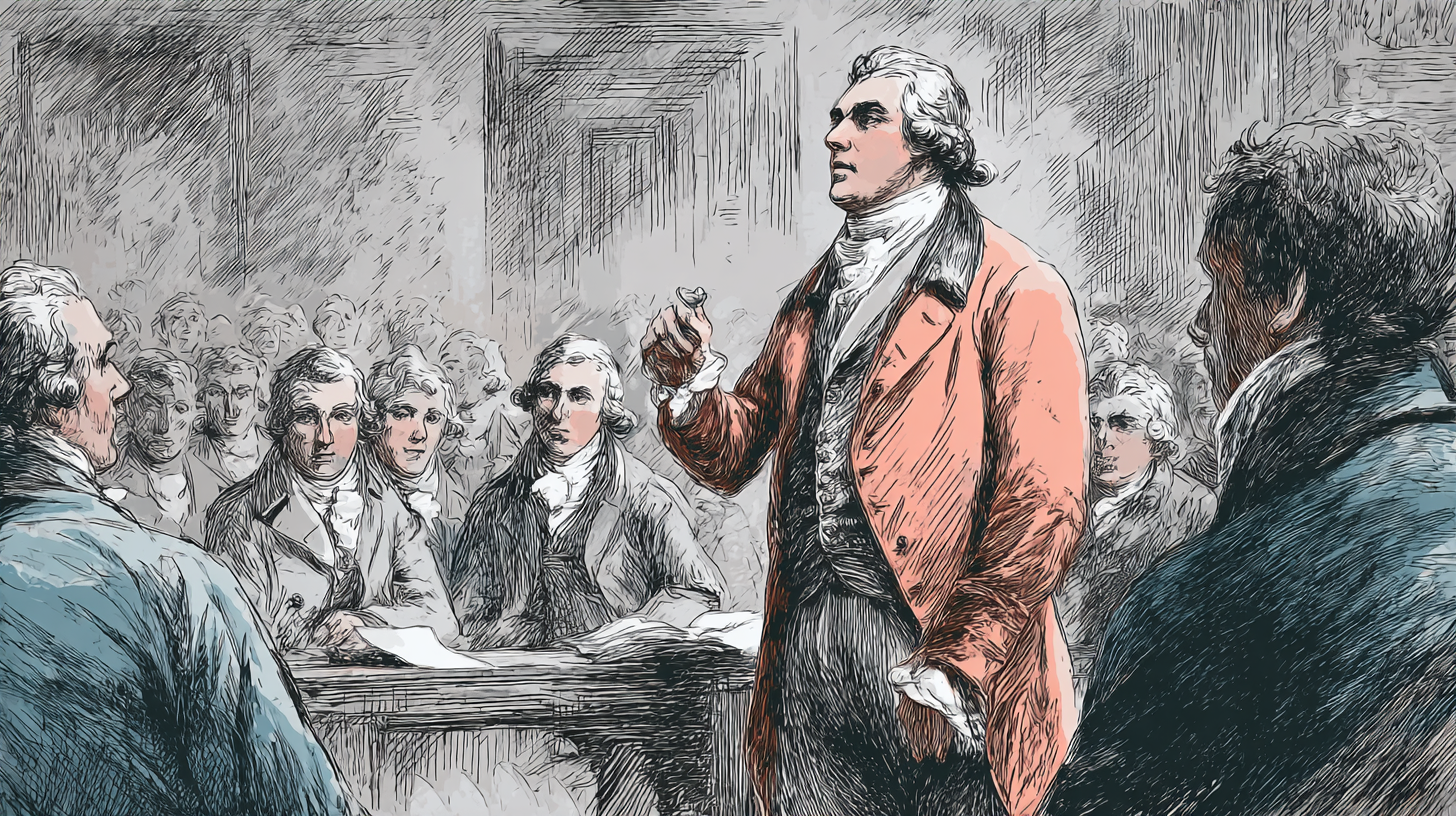
A fictionalised depiction of Olaudah Equiano, former slave and abolitionist activist, giving a speech
If we want to identify a single starting point of British abolitionism as an organized social movement in the modern sense, the establishment of the Society for Effecting the Abolition of the Slave Trade on 22 May 1787 is a good candidate. The Society was instrumental for the growth and eventual success of the movement.
The background, however, stretches further back. Quakers were among the earliest Christian groups to take institutional steps against the slave trade (their London Yearly Meeting voiced disapproval by 1727), with stronger discipline and sustained abolitionist leadership consolidating later in the 18th century. They had experimented with anti-slavery pamphlets and newspaper interventions before abolitionism went mainstream. Granville Sharp, a polymath, legal activist, and passionate controversialist, had defended enslaved and formerly enslaved Black Londoners in court from the 1760s, winning early legal victories and helping make slavery a visible issue to the London public. Other critics of slavery existed as well, but their voices were scattered and lacked organized structure.
In 1785, while preparing a submission for a prestigious Cambridge Latin essay competition on the morality of slavery, divinity student Thomas Clarkson became deeply affected by the evidence he encountered. After winning the contest, he expanded his essay into a book published by a Quaker press and resolved to devote his life to the abolitionist cause.
Clarkson began collecting evidence about the slave trade by interviewing eyewitnesses, especially ship captains, surgeons, and sailors, and by recruiting influential allies. He allied with the Quakers and helped found the 12-member committee for abolition in 1787, composed mainly of Quakers and three Anglicans, including himself and Granville Sharp. This kind of organized humanitarian campaign was a novelty in Britain. The Quakers’ prior experience as a pressure group provided crucial organizational capacity, correspondence networks, and discipline, while Anglican participation broadened the movement’s legitimacy in a class-conscious society.
The Society conducted organised advocacy at scale. Antislavery pamphlets and newspaper articles were published, and public debates were held. Clarkson tirelessly travelled throughout Britain to advocate for the abolition of the slave trade, organise local antislavery societies, and gather names for petitions to Parliament. The abolitionist cause became popular with the public, especially in industrial cities such as Manchester. Antislavery societies were formed in major towns and cities across the British Isles, and over the years hundreds of thousands of people signed petitions against the slave trade.
A key parliamentary ally emerged in William Wilberforce, an evangelical Member of Parliament. Over the late 1780s and early 1790s, hundreds of pages of testimony documenting the brutalities of the slave trade were presented in parliamentary hearings, but the political power of West Indian planter interests slowed progress. In 1792, a resolution for the abolition of the slave trade passed the House of Commons but was diluted through the addition of the word “gradual,” then stalled in the House of Lords.
War with revolutionary France in 1793 – and later with Napoleonic France from 1799 – pushed reform-minded politics to a halt. The abolitionist cause entered what felt like a decade-long winter.
Even during this lull, events in the Caribbean shifted perceptions. Britain’s disastrous intervention in the French colony of Saint-Domingue, amid the Haitian Revolution, proved extraordinarily costly in lives and money and forced many Britons—including soldiers and officials—into more direct contact with the realities of plantation slavery and enslaved resistance. By the early 1800s, the Haitian Revolution and the declaration of Haitian independence (1804) had changed the way many people in Britain thought about the stability, costs, and moral status of its West Indian plantation system.
A breakthrough came through James Stephen, an influential lawyer and advisor to MPs who had witnessed slavery’s horrors while living in the Caribbean. He framed abolitionist goals in terms that resonated with wartime priorities, proposing legislation to bar British subjects from participating in the slave trade with the colonies of France and its allies. In effect, this was a huge blow to British slave trade since a large share of British slaving serviced foreign territories, sometimes via neutral flags. As the movement’s networks revived and public enthusiasm returned, abolition again became politically viable, and in 1807 Parliament finally passed a bill abolishing the British slave trade. From 1808 the Royal Navy’s West Africa Squadron became a key instrument in enforcement.
Yet hundreds of thousands of people remained enslaved in Britain’s Caribbean and other colonial possessions. In 1823, former members of the abolition committee formed the London Society for Mitigating and Gradually Abolishing the State of Slavery in the British Dominions. The Society’s gradualism clashed with grassroots sentiment demanding immediate emancipation, voiced especially by women, including the Quaker activist Elizabeth Heyrick. Women’s antislavery groups organised locally, circulated arguments for immediate abolition, and canvassed communities house by house.
Political reform in Britain also mattered. Growing pressures to reform Parliament in the late 1820s and early 1830s energised antislavery organising and weakened the ability of entrenched interests to block change indefinitely.
Events in the colonies further shifted public opinion. Missionaries working among enslaved communities became targets of planters’ hostility. Churches were burned, and figures such as John Smith became martyrs in the public imagination. The large Jamaican uprising of 1831 underscored the escalating human, military, and political costs of maintaining slavery.
After parliamentary reform passed in 1832, the political conditions for decisive action improved. In 1833, the emancipation bill passed both Houses, ending slavery across most of the British Empire. There is, of course, much more to the story and its aftermath—including the apprenticeship system, compensation to slave owners, and the long arc of post-emancipation inequality—but the movement’s core achievements were secured.
How they did it
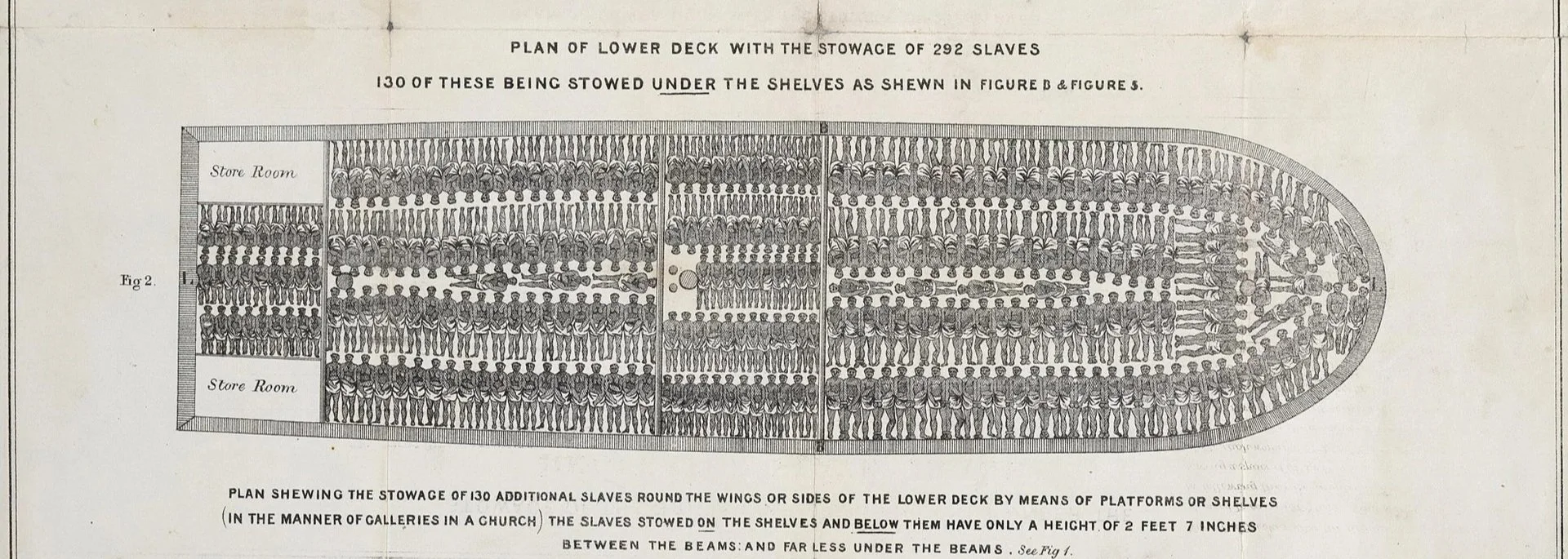
The famous diagram of the slave ship Brookes, an example of an early influential infographic.
The movement employed a diverse repertoire of strategies:
Legal action: early litigation by Granville Sharp and others helped bring slavery into the public legal arena.
Political mobilization: Abolitionists aimed their case at Parliament. They compiled extensive documentary evidence and used parliamentary hearings to have the atrocities associated with slavery in the official record. Wilberforce provided persistent legislative leadership, repeatedly bringing the issue before MPs even when defeat was likely.
Economic pressure: they pioneered consumer boycotts, most famously the boycott of slave-grown sugar.
Public advocacy: pamphlets, books, newspaper articles, travelling lectures, and public debates created a national conversation.
Visual communication: Abolitionists used emblems and images to make distant suffering legible. emblems such as “Am I not a man and a brother?” and the diagram of the slave ship Brookes functioned as powerful early infographics and moral appeals.
Strategic goal-setting: the initial goal was the abolition of the slave trade, not slavery itself, judged to be politically achievable and a likely stepping stone to full emancipation.
Coalition-building: they appealed not only to sympathy for enslaved people but also to concern for sailors, whose mortality could reach 20 percent on some slave voyages, broadening the base of public concern.
Christian influence
It is striking how thoroughly Christian the movement was.
Nine of the twelve original committee members were Quakers. The Quakers had already condemned slavery as incompatible with Christian ethics and brought organizational skill, networks, and determination. Though socially marginalized, they provided crucial infrastructure.
Key Anglicans and evangelicals helped broaden the movement’s reach. The core abolitionist organiser and advocate Thomas Clarkson was an ordained Anglican deacon. Granville Sharp was also a lay Bible scholar, and marshalled theological arguments against slavery. William Wilberforce’s parliamentary leadership was inseparable from his evangelical spirituality and understanding of moral reform.
Methodist influence also mattered. John Wesley, founder of Methodism, spoke powerfully against slavery in Thoughts Upon Slavery, denouncing the practice as contrary to justice and mercy and calling for its abolition. In one of his final letters before his death, Wesley urged Wilberforce to persevere until the institution disappeared.
Hindsight
By modern standards, the movement leaves some things to be desired. Abolitionists collected extensive testimony from captains, doctors, and sailors, but they often made less room for the testimony and leadership of enslaved and formerly enslaved people themselves. Their rhetoric tended to appeal to pity more than equality, and it could be paternalistic.
At the same time, their primary institutional target was Parliament, and their persuasive choices were shaped by the sensibilities of elite British audiences. They operated within the moral and political vocabulary of their time. Even so, a modern movement would typically be expected to centre the voices of the oppressed more explicitly, both ethically and strategically, than the British abolitionists usually did.
Protests can be effective, but success is highly variable
Protests can be effective, but success is highly variable; impact evaluators question the cost-effectiveness of protests relative to other targeted interventions.
A literature review of protest movement outcomes from 2022 by Social Change Lab concludes:
There is strong evidence that protests or protest movements can be effective in achieving their desired outcomes in North America and Western Europe, specifically within issues of civil rights, climate change, and social welfare.
However, the report notes that “[t]here is currently very little literature on the long-term impacts of protest on public opinion or public discourse.” There is also very little research into protest outcomes in the Global South, so generalising the findings above to other regions is tenuous. The table below shows a summary of the main findings of the literature review.
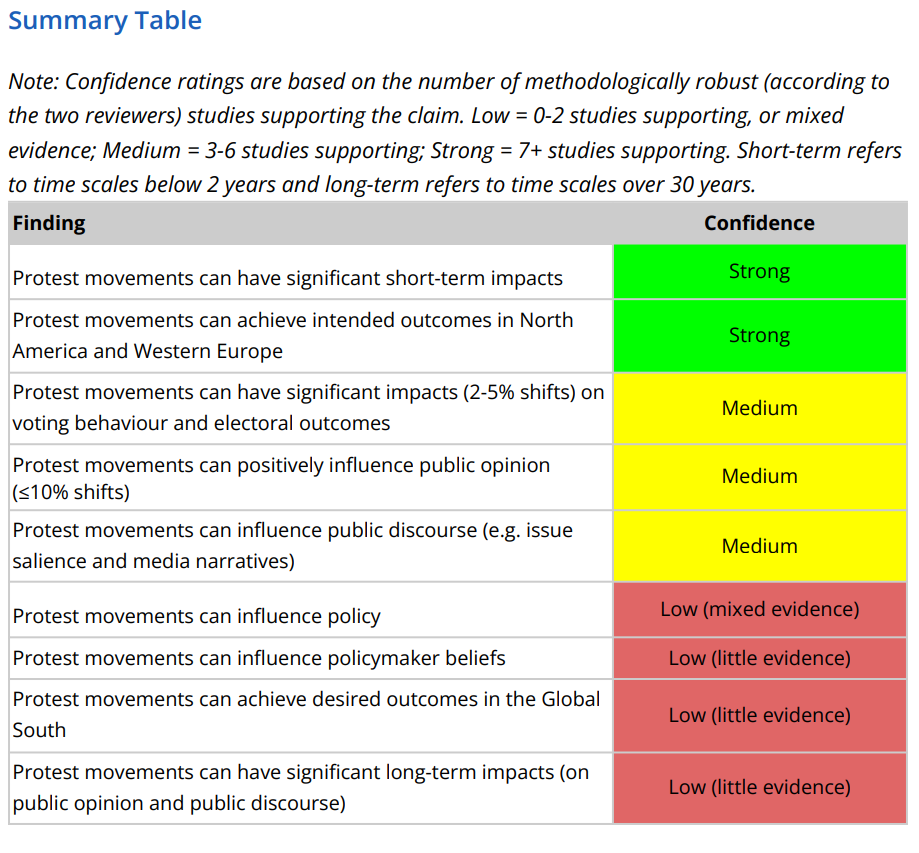
Ozden & Glover 2022d, p.2
Many but not all tactics employed in social activism fall under the category “protests”. There is evidence that protests work in creating social change.
-
In a review of 2809 protests in 101 countries, comprising over 900 protest movements, Ortiz et al found that 42% of protests resulted in some kind of achievement.
In North America, 46% of the examined protests were successful, and in Europe, the number was 39%.
Note, though, that the bar for “some kind of achievement” was low: achievements were understood as “direct and indirect responses from opponents or by society to a protest episode, responding in some measure to the grievances and demands raised by protestors.” (67–68)
In a 2022 report Protest Movements: How Effective Are They? (Ozden & Glover 2022d), Social Change Lab synthesises the results of their research into protest movement outcomes. The methods used include public opinion polling, literature review, expert interviews, policymaker interviews, a case study of Extinction Rebellion, and a cost-effectiveness analysis. They concluded that:
Protests can lead to a small (2-5%) net positive change in public opinion (60–80% confidence)
Protests can lead to a small net positive change in policy (40-60% confidence)
Protests can lead to a moderate net positive change in public discourse (4/5) with 60-80% confidence.
There is a large (over 10x) difference in protest effectiveness (60-80% confidence)
For animal advocacy protests specifically, a report by Animal Charity Evaluators from 2018 concludes that protests create some net positive change for animals, but they are uncertain about this conclusion. Animal Charity Evaluators’ estimate for the cost-effectiveness of protests compared to other interventions they have evaluated ranges from 2/5 to 4/5.
-
They give their conclusion a 2/5 certainty where
1 = We are highly uncertain about the impact this intervention has for animals
3 = We are moderately certain about the impact this intervention has for animals.
5 = We are highly certain about the impact this intervention has for animals.
Their cost-effectiveness scale runs like this:
1 = This intervention is not cost-effective compared to other interventions we have evaluated
3 = This intervention is comparable to the other interventions we have evaluated, in terms of cost effectiveness.
5 = This intervention is cost-effective compared to other interventions we have evaluated.
It’s worth quoting their explanation for protest cost-effectiveness in full:
We have substantial uncertainty about the cost effectiveness of protests compared to other interventions, and we think that different kinds of protests likely vary in their cost effectiveness. The cost effectiveness of protests that are used as one component of a corporate campaign seems to be above average relative to other interventions. The cost effectiveness of protests with less specific targets and less specific asks seems to be below average relative to other interventions, at least in terms of effects that are relatively short-term and easily measurable. We recognize that all protests likely have difficult-to-measure, longer-term outcomes that we are unable to account for in our cost effectiveness models.
Social movement success factors
Organisation, governance, and infrastructure
According to interviews of social movement experts, the organisation and governance of activists is one of the most important factors for social movement success. They also thought that the experience of the core team and their ability to handle internal conflict were important success factors.
According to a report by UK think tanks Runnymede and IPPR, successful movements have cultivators. These are organisations that:
bring “people and organisations together to build community, develop trust, relationships, shared language, and joint strategies”
bring in (other) investors
cushion failures, mediate tensions, look after the wellbeing of people and organisations
share learning: “Cultivators encourage experimentation and innovation. They help set goals, measure success and capture and share learnings across the ecosystem”
Evidence from both practitioners and scholars indicates that durable movement victories depend on organizational infrastructure rather than one‑off mobilisations. Organizer Dan Cantor wrote that "you don't organize movements. You build organizations, and if movements emerge, you may catch their energy and grow." Sociologist Edwards urges investment in year‑round, locally rooted structures that operate independently of election cycles.
Number of participants

Based on a study of all campaigns (both violent and nonviolent) for the overthrow of governments or territorial liberation since 1900, Erica Chenoweth formulated a 3.5% rule: campaigns like these almost always succeed if they can mobilise 3.5% of the population. (Source).
However, she notes that “one nonviolent movement, Bahrain in 2011-2014, appears to have decisively failed despite achieving over 6% popular participation at its peak. This suggests that there has been at least one exception to the 3.5% rule, and that the rule is a tendency, rather than a law” and that “most mass nonviolent movements that have succeeded have done so even without achieving 3.5% popular participation.” (Source)
There are other studies that link the number of participants in other types of protests to impacts on the outcome. See here and here.
Harnessing external events
Example: the murder of George Floyd, which catalysed the BLM movement
Successful movements are ready. According to the Movement Action Plan (MAP) developed by social activist Bill Moyer, “trigger events” can catalyse movement success. They activate people and shift the public debate. Movements can act within the window for change. Trigger events can help movements scale up or gain significance, if the movements can capitalise on them. An example of a significant trigger event in recent times was the murder of George Floyd, which catalysed the BLM movement. Movements may be able to create events of their own, for example by large scale protests. (Source, p. 36–37, see Moyer’s original here)
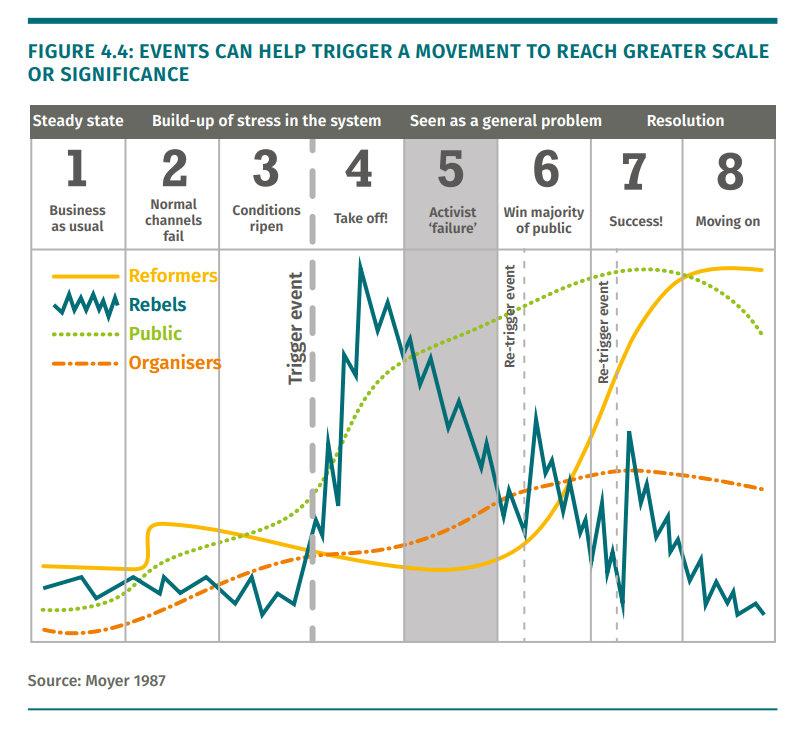
Figure 4.4 from Making Change: What Works?by IPPR and Runnymede, in turn adapted from Moyer 1987 (IPPR-Runnymede version used for better readability)
The WUNC scorecard: Diversity, Worthiness, Unity, Numbers, and Commitment
Sociologist Charles Tilly developed a classic framework that he argues observers use to judge whether a collective claim is worth taking seriously: they look for public displays of Worthiness, Unity, Numbers, and Commitment (WUNC). This would then imply that displaying these qualities is closely tied to movement success.
Tilly developed the idea while tracing the rise of modern social movements. He noted that protests which appear disciplined, numerous, and self‑sacrificing were consistently more persuasive to authorities and bystanders than equally angry but less orderly gatherings.
-
Tilly’s framework continues to be used by scholars of social movements (see 1, 2, 3, 4, 5).
Animal Ask, an organisation supporting animal welfare actors with research, has adopted dWUNC as a tactical checklist for evaluating campaign options.
In Social Movements, 1768‑2004 he calls WUNC “performances that back up identity claims” and stresses that the elements work multiplicatively: if any drops to zero, the protest’s perceived leverage collapses. (Source)
Worthiness signals moral legitimacy through cues like peaceful demeanour, symbols of respectability, or the voice of traditionally “deserving” constituencies.
Unity is conveyed by matching signs, slogans, or tightly packed marching formations that suggest a coherent collective will.
Numbers remain the most visible metric: head‑counts, aerial photos, and crowd estimates all testify to constituency size.
Finally, Commitment is displayed through risk‑accepting tactics (e.g., sit‑ins, hunger strikes) or sheer endurance, indicating that participants will not withdraw easily. Together, high WUNC scores convince elites that the group can mobilise votes or disrupt routines in the future, which gives its demands added weight. (Source)
Subsequent research confirms that media coverage routinely frames protests in WUNC terms. Journalists mention turnout, discipline, and sacrifice even when summarising very different issues.
-
Analyses of Belgian television news, for instance, found that once an event reached a certain “numbers threshold,” reporters were more likely to also comment on unity, commitment, and moral stature.
This evidence supports Tilly’s claim that WUNC functions as an implicit heuristic for third‑party audiences and helps explain why organisers invest heavily in choreography, attire, and symbolism.
Complexity, Visibility, Scale and Power, Resistance
A report on factors that enable movements to realise significant change by UK think tanks IPPR and Runnymede Trust highlights four important dimensions for movement success, as well as recommendations on what movements can do.
1. Complexity of the issue
Some problems are relatively straightforward to solve. For example, the hole in the ozone layer above Antarctica is caused by human-produced ozone-depleting substances, and international treaties phasing out their production such as the Montreal protocol are a simple (in principle) solution to the problem.
Other problems are more complex because they require sustained change of behaviour from large groups of people instead of clearly defined policy steps. Climate change is an example of a more complex environmental problem.
What movements can do: simplify complex issues, for example by breaking them down into their constituent parts or reframing them (example: the climate change movement advocating for a "net zero" goal).
2. Visibility of the issue
Problems differ in how visible and apparent they are. It is relatively easy to activate people on problems that relate to their identities. Social problems that have delayed or geographically distant impacts or which are less related to people's identities are harder.
What movements can do: Make invisible harms and consequences visible (for example, "smoking kills" public health campaigns).
3. Scale of the issue and the power of the people affected
The number of people affected by the problem varies between movements, as does the power they have to push for change.
What movements can do: Increase the power of marginal groups by recruiting allies outside the group or putting excluded groups into positions of power.
4. Resistance to change
The amount of entrenched interest set against the change the movement is trying to achieve. It is easier to ask for change that is more congruent with existing power structures and social norms.
What movements can do:
Find ways to make change that are more in line with the status quo (for example, the environmental movement advocating for technology as a way of reducing the cost of climate-friendly actions).
Increase the power of those sympathetic to change and decrease the power of those against it.
However, these approaches carry the risk of compromise. Advocating for simplified or more achievable goals may later hamper the movement's ability to achieve deeper change.
What protest strategies work?

A disruptive sit-in protest on a motorway
In reality, for almost every social issue, we have no clue what “the most effective” strategy is at any one time. The importance of context and relevance likely trumps lessons from previous movements (we have some research highlighting this!) —James Özden here
There are numerous different strategies that social activists use. Trying to pinpoint exactly which ones are the most effective may be a doomed effort; however, we might still be able to draw out some general patterns and tendencies, and find strategies that work in certain situations.
The evidence cited below suggests that disruptive, non-violent protests may be more likely to succeed than non-disruptive protests or violent protests, and radical flanks can sometimes help moderates but risk backlash and polarization.
Violence
Based on interviews conducted by the Social Change Lab, academics and social movement experts think that violent protests are mostly counterproductive.
-
As another interesting example, Erica Chenoweth studied campaigns for the overthrow of governments or territorial liberation since 1900 and found that nonviolent campaigns were more successful than violent ones. Reasons for this include
civil resistance campaigns engage more people because the bar to participate is lower than in violent protests
even when nonviolent campaigns appeared to fail in the short-term, long-term they tended to empower moderates and reformers who began to implement changes and liberalise the polities in question.
However, “large, disruptive non-violent protests may be more likely to succeed than non-disruptive protests, but this depends on the context.” (Ozden & Glover 2022b, page 2)
Disruptive protests
On 14th October 2022, two climate protesters from the group Just Stop Oil threw tomato soup on Vincent Van Gogh’s painting Sunflowers at London’s National Gallery. They then glued themselves to the wall under the painting and gave a speech asking onlookers if they were more concerned for the painting than for the planet. Numerous similar stunts have followed.
A paper by the Social Change Lab (Ozden & Glover 2022b) concludes that radical climate protests are linked to increases in public support for moderate organisations, so there are some indications that radical but non-violent protests work.
At least in animal and climate advocacy, disruptive actions with ‘low action logic’ (actions that are not logically connected to the point of the protests, like the soup-throwing example above) seem to result in increased media coverage and, as a result, more donations. (Source)
Other notable examples include the stunts Bruce Friedrich performed during his years at PETA, such as throwing fake blood on runway models wearing fur—these days he takes a very different approach and leads the Good Food Institute developing plant-based meat alternatives.
Radical tactics can work by making issues more salient, which can speed up policy change.
See the Christian perspectives section above for some potential tensions with disruptive tactics.
-
Cathy Rogers, Markus Ostarek, Mabli Jones and James Özden make the case for this for the Insulate Britain campaign in this study.
Notably, they conclude that the campaign may have been as cost-effective in averting greenhouse gas emissions as top climate nonprofit Clean Air Task Force.
National Highways told the High Court that the economic cost of three days of Insulate Britain protests was about £900,000, not accounting for “any costs associated with missed appointments, disruption to manufacturing or retail, missed transportation slots at airports or ports, or the direct cost to police or National Highways of managing the incidents.”
While highly disruptive and unpopular protest tactics may have negative impacts on public opinion in the short term, these effects do not last and the protests also help mobilise the movement, based on a study of prominent animal rights activist group Animal Rising disrupting the UK’s biggest horse race. (Ostarek, Rogers et al. 2024)
Excursus: Radical Flank Effect
The radical flank effect (RFE) refers to how radical groups influence the way people view more moderate groups in the same movement. Radical factions of a social movement may increase the support for moderate factions within the movement, but the evidence is mixed and nuanced.
-
According to Simpson, Willer & Feinberg (2022), radical flanks of social movements can increase support for moderate factions within the same movement.
This result was based on two online experiments in the animal rights movement and the climate movement.
The effect was driven by radical tactics rather than a radical agenda.
The moderate faction of the movement appeared less radical in contrast to the radicals, which led to more support.
On the other hand, the working paper of Fuller, Kylie, et al. (2025) found that extreme protests by climate activists reduced support for the activist group, the whole climate movement, and for climate mitigation policies. They also found no evidence that exposure to radical tactics led to greater support for more moderate groups.
Ostarek, Simpron, Rogers & Ozden (2024) “found that these flank effects depend on the extent to which a person has been exposed to activities carried out by the radical flank. This suggests that radical campaigns that attract high levels of media exposure may be more apt to generate RFEs since larger numbers of the public will be exposed to these campaigns.” (p. 1628)
The study also found these protests generated further polarisation. Those who showed more support for climate policies showed more support as a result of exposure to radical tactics, and those who started out not very supportive ended up supporting climate policies even less.
In the discussion section, the authors say positive RFE puts more moderate groups in a better strategic position. They can benefit from momentum generated by radical groups. Policy makers are also more likely to enter into dialogue with them as a result of the pressure created by the radicals.
Funding social activism

A report by Social Change Lab, based on a survey of 100 funders and in-depth interviews, concluded that most funders were open to supporting activists. They might be persuaded to give more if they
had better evidence of effectiveness,
more knowledge about who to fund
guidance on risk management.
Another approach to overcome risk and knowledge concerns would be the use of alternative funding approaches like pooled funds and intermediaries.
The authors summarise the main barriers to giving voiced by funders interviewed as follows:
Risk (how will funding reflect on my organisation)
Impact (does campaigning/activism work?)
Practicalities (how can I fund small or informal groups) and
Knowledge (who should I fund).
The report also raises the intriguing question about who needs to be persuaded. The interviews suggested that grantmakers were more progressive and risk-taking compared to boardrooms. This suggests the boards may be the limiting factor more so than the grantmakers.
Conclusions and recommendations
Practical take-aways for would-be activists
Invest in the boring stuff: management and other relevant skills.
Expert interviews highlight that movements with clear decision‑making structures, experienced core teams and a way to defuse internal conflict are more likely to win. “Cultivator” organisations that convene partners, cushion failures and share learning also show up in most success stories.
Consider non‑violent but attention‑grabbing tactics.
Non‑violent disruption (e.g., sit‑ins, blockades) reliably earns media coverage and donations, but the same studies warn that pushing the irritation too far can erode public sympathy. Violent protest, by contrast, is less effective for opinion and policy change.Note that there may be special Christian concerns regarding this type of protest. Prayerfully consider whether a disruptive strategy is in line with God’s will.
There is a chance that the media and the public may become sensitised to attention-grabbing protests; the author heard one activist claim this has happened with disruptive climate protests.
Consider making use of a “radical‑plus‑moderate” division of labour
A radical flank may make moderate advocates look reasonable and open doors for negotiation, but extreme stunts sometimes polarise audiences and depress support for the whole movement.This is another area where there may be special Christian ethical concerns. In some issues, either a radical or a moderate position could potentially be ruled out by Christian ethics.
Match tactics to the issue’s complexity, visibility and resistance.
Simplify complicated problems into graspable asks.
Make hidden harms visible through stories, images and lived‑experience spokespeople.
Broaden your coalition to bring in groups with leverage the affected community lacks.
Where resistance is high, look for interim goals that fit existing norms without compromising long‑term ambitions.
Expect high variance and measure as you go.
Most campaigns achieve only modest shifts (2–5 % in opinion or policy), but a small minority deliver outsized wins—more than a ten‑fold difference in cost‑effectiveness. Track outcomes, run low‑cost experiments and be ready to pivot or shut down tactics that under‑perform.Borrow lessons, but tailor them to context.
Historical playbooks are a starting point, not a template; effectiveness hinges on local political culture, media ecology and movement resources.Keep methods consistent with your values and constituency.
Christian or community‑centred groups often find that sticking to non‑violence and respect for civil order preserves legitimacy while still allowing robust challenge to the status quo.Find ways to use your skills.
Find ways you can make use of your existing skills in the movement. Particularly in mature, well-developed movements there are a lot of places to find your niche. In smaller movements, the environment is more entrepreneurial and starting things is important.
Recommendations for decision-makers
Invest selectively, not indiscriminately. Target campaigns with clear theory‑of‑change, demonstrated organisational capacity, and credible leadership and core teams to maximise your chances of funding the high‑reward tail.
Balance the radical flank. Funders might be able to increase leverage by coordinating support: resource non‑violent disruptive groups to set the agenda, while simultaneously backing moderate partners positioned to negotiate concrete wins.
Build evidence in under‑researched areas. Rigorous evaluation of long‑term outcomes of protests and other forms of social activism as well as campaigns in the Global South could sharpen future funding decisions. Note that such information would benefit all activist movements, so it might also boost the effectiveness of movements pushing for goals you don’t share.
De‑risk through pooled vehicles. Use shared funds or intermediaries to handle due‑diligence, compliance and reputational shields, enabling quicker, larger bets on promising movements.
Stay value‑aligned. Where faith or ethical considerations apply, favour tactics consistent with non‑violence and respect for civil order. Non-violent tactics also appear to be more effective.
Career Recommendations
While we don’t necessarily recommend social activism as a priority path, for those with a high interest in this area or who otherwise have a good personal fit, we recommend building applicable skills that are also transferable to other impactful domains, such as:
Management
Communications
Public speaking
Marketing and graphics
Finance and accounting
Partnerships and Community Building
We also recommend considering tactics that may have considerably more impact than protesting in making a difference on our top problem areas.
Some of these include:
Lobbying (for most cause areas)
Other careers in politics and policy
Recommended resources
Influencing for Impact Guide: How to deliver effective influencing strategies
Media Impact Monitor – a prototype media analysis tool
Tactics to curb fossil fuel corporations | Social Change Lab
Campaign Bootcamp: List of resources for campaigning organisations, especially grassroots ones. Not maintained since 2022, but resources still online. Tactics star and the Campaign tactics timeline highlighted as especially relevant for tactics by Animal Ask
Global Nonviolent Action Database: list of tactics with associated case studies
Beautiful Trouble Toolbox: Lists “key strategies and tactics that have inspired people-powered victories & upended the status quo,” with extensive descriptions, as well as theories, stories and methodologies.
Nonviolence International Tactics Database: list of tactics and corresponding case studies
Protest movements: how effective are they? – one of the main sources of this report
A review of the literature review conducted as a part of the investigation Protest movements: how effective are they?