
Global Mental Health - Full Report
25 August 2026
written by Vesa Hautala
A big, harmful, and neglected problem with proven solutions
Report depth: Moderate

Our Recommendation
Mental health conditions cause enormous suffering, affect over a billion people worldwide, and remain drastically underfunded, especially in low- and middle-income countries. But effective, affordable, and scalable solutions already exist. We think the impact of some global mental health opportunities is possibly on par with the best global health and development interventions, though there is significantly more uncertainty involved compared to the best physical health interventions.
We think readers who want to contribute to solving this problem should consider:
Donating to organisations that cost-effectively improve global mental health. Top choices include Friendship Bench Zimbabwe and StrongMinds.
These organisations deliver evidence-based psychotherapy in low- and middle-income countries through trained community members, at remarkably low cost.
The Happier Lives Institute estimates they produce 40–49 wellbeing-adjusted life years (WELLBYs) per $1,000 invested (McGuire et al 2024), making them 5–6 times more cost-effective than unconditional cash transfers for increasing self-reported wellbeing. (See below for more info on WELLBYs as a measure)
For suicide prevention, donating to the Centre for Pesticide Suicide Prevention (CPSP), which works with governments in low- and middle-income countries to restrict access to highly toxic pesticides, a leading means of suicide in rural communities.
Coefficient Giving has supported CPSP since its launch in 2017 and has provided it with more than $20 million. The Bloom Wellbeing Fund’s report on global mental health identifies CPSP as a promising fundable opportunity (see section 2.2 of the report), and GiveWell’s evaluation concluded that CPSP was probably decisive in securing restrictions in Nepal that may save hundreds of lives annually.
We think readers who feel called to use their careers for global mental health should consider the following options (see the section Career Paths in Global Mental Health for more details):
Working at an organisation delivering or scaling evidence-based mental health interventions in low- and middle income countries (LMICs)
note that the field is small and there are not many open positions, and many of these positions are in the organisations’ target countries instead of the UK or the US.
Pursuing research in global mental health, especially cost-effectiveness analysis, implementation science, or clinical trials of interventions in low-resource settings.
Working to advocate for increased mental health funding, especially in international health aid, or pesticide regulation.
Donating sacrificially to effective mental health organisations.
More tentatively, we think it may be beneficial for Christian leaders and church networks to consider how churches and faith communities in LMICs could support access to evidence-based mental health care, including by reducing stigma, providing pastoral and community support, and partnering with qualified mental health providers. Churches have substantial reach and trust in many rural and underserved communities. While this seems like a good idea in principle, we are unsure how feasible it is to implement and this likely varies widely across different contexts.
What Is Mental Health?
According to the World Health Organisation,
Mental health is a state of mental well-being that enables people to cope with the stresses of life, realize their abilities, learn and work well, and contribute to their community. It has intrinsic and instrumental value and is a basic human right.
…
Mental health conditions include mental disorders and psychosocial disabilities as well as other mental states associated with significant distress, impairment in functioning, or risk of self-harm. The WHO defines a mental disorder as a clinically significant disturbance in an individual’s cognition, emotional regulation, or behaviour.
This report focuses on the most common disorders, which together represent about 89% of the global burden of mental illness according to the Bloom Wellbeing Fund’s Global Mental Health report (section 1). These include:
Depression and anxiety (affecting 4–6% of the world’s population at any given time)
Substance and alcohol use disorders and conduct disorders (affecting 1–2%)
Self-harm and suicide
Schizophrenia, psychosis, and bipolar disorder, which are experienced by roughly 1% of the world’s population at a given time
Scale of the Problem
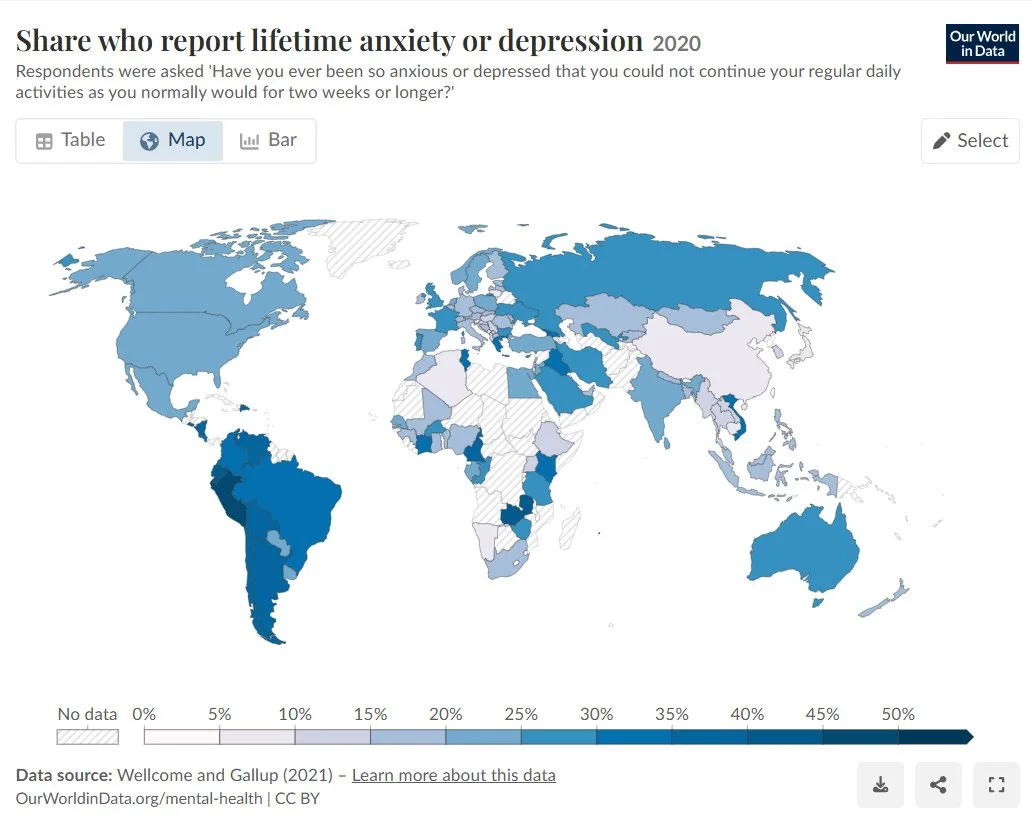
Share of people who report lifetime anxiety or depression. Source: Our World in Data (CC BY)
Global mental health is an enormous problem, associated with large amounts of disability and mortality. The scale of suffering is vast, and the problems affect families and entire communities in addition to the individual. Mental health disorders are becoming more common globally and the causes of this are felt to be multifactorial.
Common
Mental health conditions are common. The most recent and reliable data by IHME (Institute for Health Metrics and Evaluation) indicate that 18% of the global population lives with a mental health condition (according to the definition used in the Bloom Wellbeing Fund’s Global Mental Health Report; WHO’s 2025 estimates put the number of people with mental disorders at over 1 billion).
Depression and anxiety are the most prevalent conditions, experienced by 4–6% of the world's population at any given time. Lifetime prevalence is much higher. Substance use disorders and conduct disorders affect 1–2% of people at a given time. Disorders like schizophrenia, psychosis, and bipolar disorder are rarer, affecting roughly 1% of the population, but acute psychosis imposes an extraordinarily heavy burden on those who experience it. Paradoxically, measured prevalence rates are higher in high-income countries than lower-income countries.
-
The global burden of mental illness can also be measured in disability-adjusted life years, or DALYs, a single figure that combines years of life lost to early death with years lived in poor health. The Global Burden of Disease 2023 study estimated 171 million DALYs from mental disorders worldwide, roughly 6% of all ill health and premature deaths from any cause. (Counting substance use disorders and self-harm alongside mental disorders, as the Bloom report does, raises this to 8.6%.) That makes mental illness the fifth-largest cause of disease burden globally, up from twelfth in 1990. Because these conditions rarely kill people directly but often last for years, mental disorders are now the single leading cause of time spent living with disability worldwide, accounting for more than a sixth of it.
-
According to the Global Burden of Disease 2019 study, age-standardised DALY rates for mental disorders are highest in regions like Australasia, North America, and Western Europe. Recent work on the “cross-national mental disorder vulnerability paradox” argues that the difference is real rather than only a reflection of undermeasurement in lower-income countries, but this does not mean that mental health problems are not underdiagnosed in LMICs.
Harmful
Mental health conditions are among the most harmful experiences an individual can endure in terms of self-reported wellbeing. Depression and anxiety reduce life satisfaction by around 1 point on a 0–10 scale, roughly twice the impact of unemployment, divorce, or chronic physical conditions like arthritis. (Bloom Global Mental Health report, section 1.1.1)
In this report, we will often use WELLBYs as a measure of the harm caused by mental health disorders. A WELLBY, or a Wellbeing-Adjusted Life Year, is a unit equal to a one-point improvement on a 0–10 life satisfaction scale for one person for one year. (See more details on WELLBYS in the section Measuring Cost-Effectiveness: WELLBYs.)
The effects of mental health conditions extend beyond the suffering individual. According to modelling by the Happier Lives Institute, 16% of the suffering experienced by someone in mental distress may be shared by those close to them (though this is a tentative and highly uncertain estimate).
Mental health conditions are closely linked to suicide, which claims over 760,000 lives worldwide each year. Studies in high-income countries find a mental disorder in around 90% of suicide cases, though the figure is lower in LMICs (around 58% according to this 2019 meta-analysis), and many suicides occur impulsively in moments of crisis. Mental health conditions also affect productivity and social relationships, and in some cases contribute to interpersonal violence.
Mental disorders are estimated to cost the global economy $16 trillion between 2010 and 2030 in lost output.
Growing
The prevalence of mental health conditions has been rising. The share of the global population living with a mental health disorder has increased to 18% from 16% in 2019 (according to an aggregation used in the Bloom Global Mental Health Report, section 1.2). Mental health is becoming a relatively larger part of the global disease burden as infectious disease is declining. The global mental health burden is also falling more on young people than previously.
-
Our World in Data (drawing on Global Burden of Disease data) shows that age-standardised prevalence remained roughly the same from 1990 to 2019, but absolute numbers rose 48%, driven by population growth and ageing. But population growth and age profile shifting are no longer the whole story. Since 2019, the share of people with depression has risen by roughly a quarter, and with anxiety by nearly half, and those figures already account for the world's changing age profile. The burden has also moved more on younger people. For the first time since the Global Burden of Disease study began in the early 1990s, mental-disorder DALY rates now peak among 15 to 19 year olds rather than the middle-aged, which the study's lead author describes as a first in the study's history.
The researchers behind those estimates point to the aftermath of the pandemic combined with poverty, insecurity, violence and abuse, and weakening social connection. A 2024 Lancet Psychiatry commission on young people makes a similar case, adding inaction on climate change, economic precarity, and harmful social media. Its evidence for those trends comes mostly from wealthy countries, though, while roughly 90% of the world's young people grow up in low- and middle-income ones. Some of the measured rise may also reflect better recognition rather than more illness, though that is unlikely to account for all of it.
Structural factors
The interventions recommended in this report address mental health conditions at the individual and community level. Many of these conditions are driven or exacerbated by structural factors like poverty, displacement, etc., and fully addressing the problem would also require addressing these upstream causes. A full treatment of structural contributors to mental health is beyond the scope of this report, but the neglectedness and cost-effectiveness case for the interventions discussed here does not depend on them being the only response needed. Cost-effective, evidence-based treatment for people suffering now and systemic efforts to address the root causes of that suffering complement rather than compete with each other.
Neglectedness
Mental health receives only a very small share of global health funding compared to its share in of the global disease burden. This neglect is particularly acute in the countries where the burden is greatest, and what funding exists is often spent ineffectively. Mental health conditions remain undertreated all over the world but especially in lower-income countries. Mental health research is also underfunded compared to how much of global ill health is caused by mental health problems.
Underfunded
Only about 0.5% of health-directed international assistance is spent on mental health despite mental health disorders constituting 8.6% of the global disease burden. (Bloom report, p. 14 fn 29 and p. 16 fn 36)
Mental illness accounts for at least 45% of the disease burden among 10 to 24 year olds, while roughly 2% of health spending goes to mental health.
-
In low- and middle-income countries, the median government spending on mental health ranged from 0.6% of the country’s health budget in low-income countries to 1.4% in upper middle-income countries, compared to 4.3% in high-income countries (see Section 3.1 of the WHO Mental Health Atlas 2024). The backbone of funding comes from small and medium-sized foundations, many of which focus on mental health alongside other priorities.
Mental health received approximately $239 million in development assistance in 2023 according to Bloom, compared with $16.5 billion for HIV/AIDS and $6.38 billion for malaria. Private philanthropic funding appears smaller still: a 2024 Prospira Global report estimated that private philanthropy contributed approximately $74 million to mental-health development assistance in 2023, although available funding data remain limited and fragmented.
Undertreated
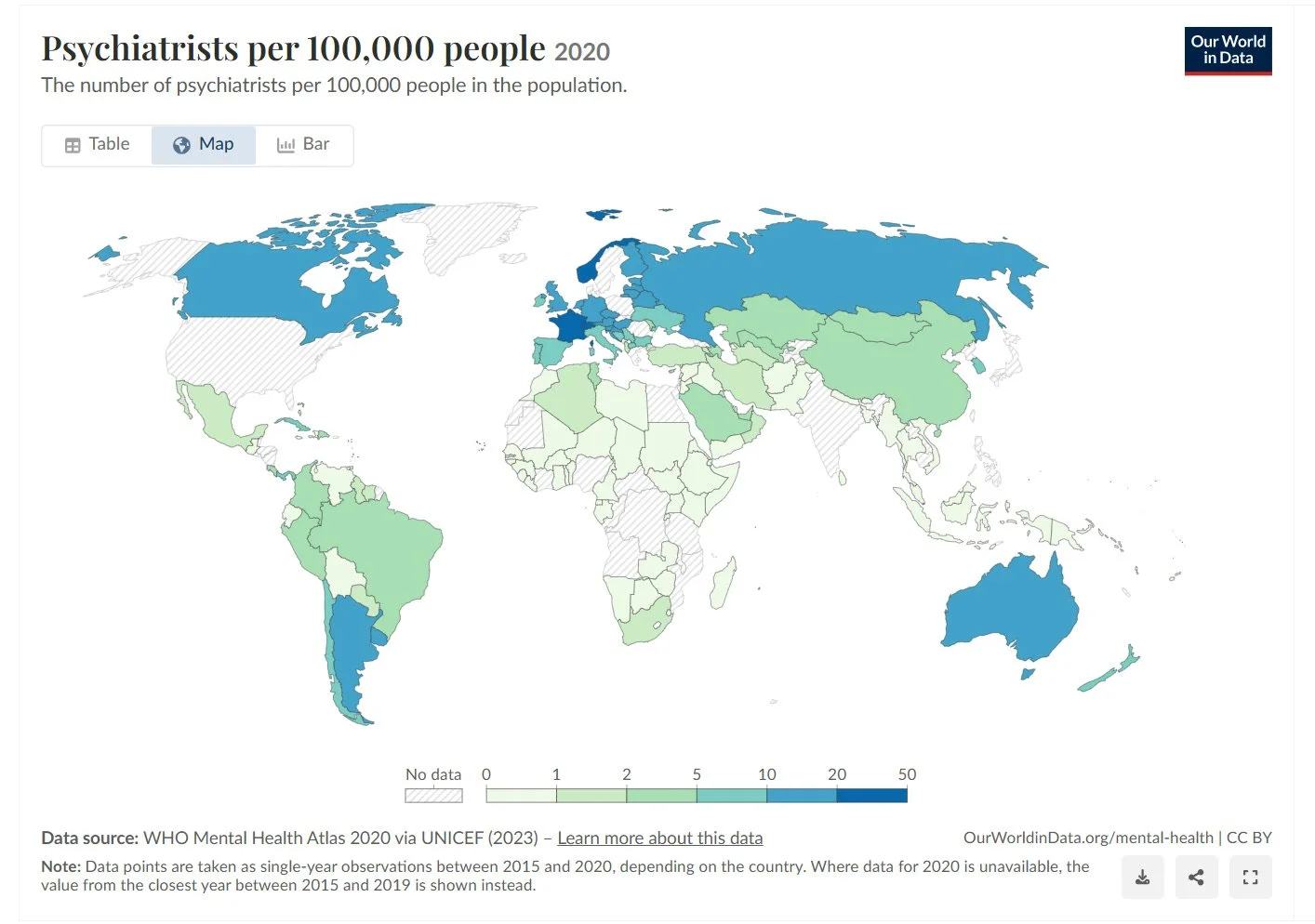
Psychiatrists per 100,000 people. Source: Our World in Data (CC BY)
The treatment gap for mental health conditions is enormous. The Bloom report (section 1.3.1) estimates that globally, only about 19% of people with mental health conditions receive treatment and about 7% receive “adequate treatment,” while in LMICs a mere 3% receive adequate treatment for depression cmpared to 23% in high-income countries.
Money Poorly Spent
Even the limited funding that exists is often spent ineffectively. In LMICs, 54% of spending on mental health goes to psychiatric hospitals (see Section 5.2 of the WHO Mental Health Atlas 2020), compared to 25% in high-income countries. These hospitals are often located in urban areas, far from where the majority of the population lives. They can be overcrowded, offer poor conditions, and sometimes involve coercion (Molodynski et al., 2017). More cost-effective care can often be provided in primary care and community settings by non-specialist providers. This model is discussed in detail in the solutions section of this report.
Research Also Neglected
Mental health research is also underfunded relative to the burden of disease. Reviews of the research funding landscape have generally concluded that mental health research is underfunded compared to the burden of disease mental health causes, with particularly large gaps in research funding and capacity in low- and middle-income countries.
The implication of this neglect is that additional funding for global mental health can have an outsized impact. When a field is chronically underfunded, even modest new investments can have a big impact.
The Bloom Global Mental Health Report notes that there is a lack of robust comparisons of the cost-effectiveness of interventions (Section 3.4). The report also identifies areas that would be valuable for improving the allocation of global mental health funding.
-
cost-effectiveness analyses for interventions that may improve wellbeing by treating broader environmental factors like extreme poverty and lead poisoning
finding cost-effective treatment and delivery methods for substance-use disorders and conditions including schizophrenia and bipolar disorder (grouped by Bloom under its simplified HiTOP-derived ‘thought disorders’ category)
integrating conditions like insomnia that are not currently listed as mental health conditions to global mental health discussion
research on the impact of mental health interventions on household members of the recipient (spillovers) even though they may be a large part, or in some cases even the largest part, of the benefit of mental health interventions.
Solvability: What Works
There are proven, scalable, and practical solutions available for many of the most common conditions. This is one of the most encouraging aspects of the global mental health landscape. The main barrier is not knowledge but investment and implementation. Scalable short-term psychotherapy delivered by trained lay providers is an especially cost-effective way to treat depression in LMICs. (This section draws heavily from the Bloom Global Mental Health Report 2025.)
Measuring Cost-Effectiveness: WELLBYs
Where possible, interventions in this report are primarily evaluated using wellbeing-adjusted life years (WELLBYs, see above for an explanation), a standardised measure adopted by UK and New Zealand Treasury guidelines. A WELLBY, or a Wellbeing-Adjusted Life Year, is a unit equal to a one-point improvement on a 0–10 life satisfaction scale for one person for one year, enabling direct comparison of the cost-effectiveness of diverse interventions, policies, and charities in terms of how much they improve people's subjective wellbeing. An introduction to WELLBYs can be found here. The WELLBY evaluations in this report come from the Happier Lives Institute, which conducts literature reviews, extracts effect sizes from studies, and combines them in meta-analyses to model the overall impact and duration of benefit per dollar spent. They have a living review of WELLBY cost-effectiveness analyses here.
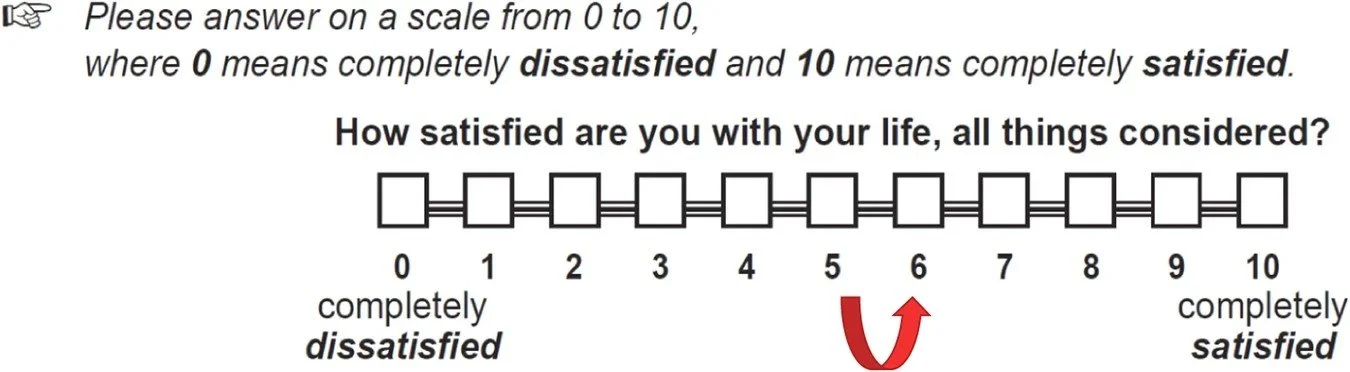
An example of a WELLBY questionnaire (Figure 2 from Frijters et al 2024)
As with any cost-effectiveness framework, WELLBY-estimates of the cost-effectiveness of mental health intervention involve uncertainty. The WELLBY approach relies on self-reported life satisfaction, which can be affected by survey design and cultural norms (OECD, 2013) – though these concerns apply primarily to cross-country comparisons rather than within-person changes we are interested in. It is worth noting that alternative frameworks like QALYs and DALYs carry their own subjective judgements: disability weights are derived from preference exercises in high-income populations (i.e., people are asked how they think life with a certain condition compares to life without it), and there is no truly objective metric for mental health impact. We cite WELLBY estimates throughout this report as the best available framework for comparing mental health interventions to other charitable uses of funds, with complementary DALY-based estimates from the Disease Control Priorities project (DCP3) and WHO-CHOICE analyses (Chisholm & Saxena, 2012).
Depression and Anxiety

Anxiety and depression are the most prevalent mental health conditions and the largest contributors to the global mental health burden. Together they account for about 46% of the world’s mental health burden and are experienced by about 4–6% of the world’s population at any given time. Fortunately, cheap and effective solutions exist.
Best solution: Psychotherapy delivered by lay practitioners
Comprehensive reviews confirm that psychotherapy of many different kinds effectively treats depression, anxiety, and other conditions in both high- and low-income countries. For depression, there is little evidence that any one major form of psychotherapy is substantially more effective than the others. (See the Bloom Global Mental Health report section 2.1, footnotes 49 and 50 for a collection of studies supporting these conclusions.)
Three key innovations make this very cost-effective in low-resource settings:
Short courses of therapy can be effective, and a large meta-analysis found no evidence that a greater number of sessions produced larger effects for adult depression (Ciharova et al., 2024).
Trained and supervised non-specialists can effectively deliver structured psychological interventions (a model known as ‘task sharing’ or ‘task shifting’). HLI’s analysis suggests lay delivery may be somewhat less effective than specialist delivery, but the substantially lower cost can make it considerably more cost-effective.
Other innovations can further reduce costs, including group-based delivery and brief treatment formats. These models can make psychotherapy remarkably inexpensive: HLI estimates that StrongMinds’ six-session group therapy programme costs about $45 per person treated.
The Happier Lives Institute estimates that funding psychotherapy in LMICs returns 40 to 49 WELLBYs per $1,000 invested, making it 5–6 times as cost-effective as unconditional cash transfers. In DALY-based analyses, Chisholm et al. (2004) estimated that primary-care-based depression treatment costs I$700–1,800 per DALY averted in low- and middle-income countries (in purchasing-power-adjusted international dollars). StrongMinds and Friendship Bench demonstrate that therapy can be delivered to hundreds of thousands in low-resource settings.
Digital services as a scalable delivery method
Several organisations are exploring digital services as a scalable delivery method for guided self-help. Delivery through digital means like WhatsApp or an app can make these interventions more accessible and lower the distribution costs. Guided self-help means people learning psychotherapy techniques by themselves, often through a workbook or app. The guidance part can be implemented through group sessions or one-on-one check-ins with a counsellor. There is a lot of research literature demonstrating that guided self-help is not inferior to standard psychotherapy, at least for common mental disorders (the effects on more intense mental illnesses are unclear). Guided digital self-help for depression is recommended by Charity Entrepreneurship. The WHO recommends evidence-based psychological self-help interventions for a range of mental health conditions.
Self-Harm and Suicide

More than 760,000 people die by suicide each year. About three quarters of these deaths occur in LMICs. In many rural communities in Asia and Sub-Saharan Africa, ingestion of highly toxic pesticides is the most common method. Mental health problems are often involved in suicide, but crucially, a significant proportion of suicide attempts are impulsive.
-
A study in rural Sri Lanka found that more than 50% of people who attempted suicide by pesticide ingestion decided to do so less than 30 minutes before the act. Although a previous suicide attempt is a major risk factor for future suicidal behaviour, most people who survive an attempt do not later die by suicide. A meta-analysis of people presenting to hospital following self-harm found that approximately 3.9% died by suicide within five years. This helps explain why preventing an impulsive attempt from becoming fatal can create a lasting opportunity for recovery.
Best solution: Restricting access to highly toxic pesticides
There is strong evidence that banning or restricting the most toxic pesticides reduces suicides by 7–45% in countries that have implemented such policies. This approach has been positively evaluated by GiveWell as promising. An economic modelling study by Lee et al. (2021) found that national bans on highly hazardous pesticides cost approximately $94 per healthy life year gained in low income and lower middle income countries. The Centre for Pesticide Suicide Prevention (CPSP) played a critical role in getting highly toxic pesticides banned in Nepal, potentially saving hundreds of lives each year.
Conduct Problems, Antisocial Behaviour, and Crime
In a landmark study in Liberia, a combined Cognitive behavioural therapy (CBT) and cash transfer programme found large reductions in criminality even ten years after treatment: 34 fewer reported thefts per year, a roughly 50% reduction. The Happier Lives Institute estimates that ACTRA, a charity delivering CBT to prevent crime in Latin America, could return 37 WELLBYs per $1,000 invested.
Alcohol and Substance Use
Alcohol and substance use disorders carry an enormous global burden. Alcohol use contributed to about 5% of deaths worldwide in 2019, according to the WHO. Solutions exist, but they are less well evaluated for cost-effectiveness in LMIC settings. Advocacy for raising the price of alcohol appears to be the most promising macro-scale intervention. (Bloom Global Mental Health report section 2.4) Alcohol taxation costs an estimated ~$200–$400 per DALY averted in LMICs. Brief behavioural interventions like motivational interviewing show some promise on a micro-scale. Overall, this is an area where more research is needed to identify clearly cost-effective approaches.
Psychotic disorders
Schizophrenia affects only about 0.3% of the population but is among the most devastating mental health conditions. Antipsychotic medications are effective at reducing ‘positive’ symptoms such as delusions and hallucinations, while psychosocial interventions are often also needed for ‘negative’ symptoms like lack of motivation, anhedonia, and social withdrawal, as recommended by the WHO. However, treatment costs can be substantially higher than for depression and anxiety.
-
The Bloom report notes (section 2.5) that treatment costs are substantially higher for thought disorders because treatment is more intensive and often requires longer-term care. (Bloom uses a simplified version of HiTOP, a research framework that groups mental health problems by shared symptom patterns rather than standard diagnoses; its ‘thought disorders’ category includes schizophrenia and other psychotic disorders, as well as bipolar disorder.) There are currently no clearly cost-effective programmes to reduce the wellbeing burden of thought disorders in LMICs. This represents an important area for further research and innovation.
Lead exposure: a neglected driver of mental ill-health
Reducing childhood lead exposure may be one of the most cost-effective ways to increase mental wellbeing globally. Exposure to lead in childhood may lead to significantly worse affective mental health in adulthood and some 815 million children are affected globally. The evidence is uncertain, however, as the conclusion is based on extrapolation from a small number of studies. For donors willing to act on “high risk, high return” opportunities, lead reduction stands out as a promising avenue for improving mental wellbeing at scale.
-
The Happier Lives Institute (HLI) has produced a detailed wellbeing-focused analysis on lead exposure, followed by a 2024 evaluation of Pure Earth. In the 2024 evaluation, HLI estimated that reducing childhood blood lead levels by 1 μg/dL would avert 1.61 WELLBYs (wellbeing-adjusted life years) of harm over the person’s lifetime. HLI also models possible benefits to household members, although these estimates are especially uncertain and are extrapolated from research on psychotherapy rather than lead exposure itself.
HLI’s estimates remain highly uncertain because the evidence linking childhood lead exposure to long-term mental health and wellbeing is primarily correlation and comes from New Zealand and Australia rather than LMICs. HLI applies substantial downward adjustments in its 2024 Pure Earth evaluation to account for causal uncertainty, replicability, and generalisability.
HLI explicitly compares the evidential situation to deworming, where very low intervention costs initially produced striking cost-effectiveness estimates despite uncertainty about long-term effects. HLI considers the evidence that lead itself is harmful stronger, but identifies better causal evidence on its long-term effects on mental health and wellbeing as a major research priority.
The charity-level cost-effectiveness estimate introduces further uncertainty. It depends on assumptions about how much childhood lead exposure in Ghana comes from cosmetics, how successful Pure Earth’s advocacy will be, and how quickly relevant regulation would otherwise occur.
Despite this uncertainty, HLI's 2024 evaluation of Pure Earth's programme to eliminate lead-contaminated eyeliner in Ghana produced a striking figure of 105 WELLBYs per $1,000 donated, approximately 14 times more cost-effective in producing WELLBYs than GiveDirectly cash transfers and over twice their estimate for StrongMinds psychotherapy. In HLI's World Happiness Report chapter (2025), Pure Earth had the highest estimated cost-effectiveness among the 24 charity evaluations included, though the authors caution that the sample was small and non-representative.
HLI classifies Pure Earth as a “Promising Charity” rather than a Top Charity, reflecting the uncertainty and Pure Earth as a “high risk, high return” opportunity.
Christian Perspectives

Mental health is not discussed in Scripture using a modern medical framework, but the Bible has many descriptions of mental distress and calls for responding to suffering with compassion (Mark 12:31). The mere absence of the modern medical framework in the scriptures ought not to justify Christian skepticism about the potential for good in mental health care. The Christian case for caring about mental health is grounded in the Scripture-based conviction that caring for the whole person (body, mind, and spirit) is central to the mission of Christians.
Mental Distress in the Bible and the Call to Compassion
Scripture contains many descriptions of inner turmoil that resonate with what we now call mental distress, even though the framing is theological and different from a modern medical one.
The Bible contains many descriptions of mental suffering. The psalms are full of poetic descriptions of anguish, intertwined with social and physical suffering such as experiences of loneliness and abandonment or physical pain and weakness. The historical narratives show episodes of dejection and despair, for example in the lives of Job and the prophets Elijah and Jonah. (1 Kings 19:4, Jonah 4:3, 8)
The Bible does not use the modern clinical framework, so Christians should be cautious about simplistic one-to-one mappings between biblical descriptions and modern diagnoses. It would be a mistake to declare confidently that Job had clinical depression as if the text were making a psychiatric diagnosis. But it would also be a mistake to act as though the Bible has nothing to say to mental suffering. What the Bible offers is not a modern taxonomy, but a human, moral, relational, and spiritual account of suffering that remains relevant.
The Bible's witness to suffering extends to a call to compassionate action. Jesus identifies himself with the vulnerable and suffering (Matthew 25:40). The Bible’s many descriptions of mental anguish show that God cares about our experiences of mental distress. The church is repeatedly called to honour the weak, care for the afflicted, and comfort the brokenhearted. This call is especially urgent for mental health because there is often stigma and misunderstanding related to it and mental health problems are often connected with other problems that make people marginalised, such as lower socio-economic standing or adverse childhood experiences.
Substance Use and Addiction in the Bible
The Bible speaks strongly and vividly against drunkenness. Proverbs 23:29–35 contains the “portrait of a drunkard” that portrays the misery and compulsive cycle of alcohol abuse. Paul commands, "Do not get drunk on wine" (Ephesians 5:18). The Bible repeatedly shows intoxication leading to shame, folly, violence, and ruin. For these reasons, there is general agreement among Christians that substance abuse is morally serious and spiritually dangerous.
This is an area where Christian communities have made practical contributions. The history of Alcoholics Anonymous is relevant here. AA and other Twelve Step fellowships modelled after it are intentionally open to people regardless of their religious background or lack thereof, but their origins were deeply shaped by Christian ideas of confession, surrender, repentance, restitution, fellowship, and dependence on a higher power. Even where AA does not adopt a Christian framework wholesale, its history is a reminder that faith communities can play a significant role in recovery from addiction.
Faith and Mental Health Interventions in LMICs
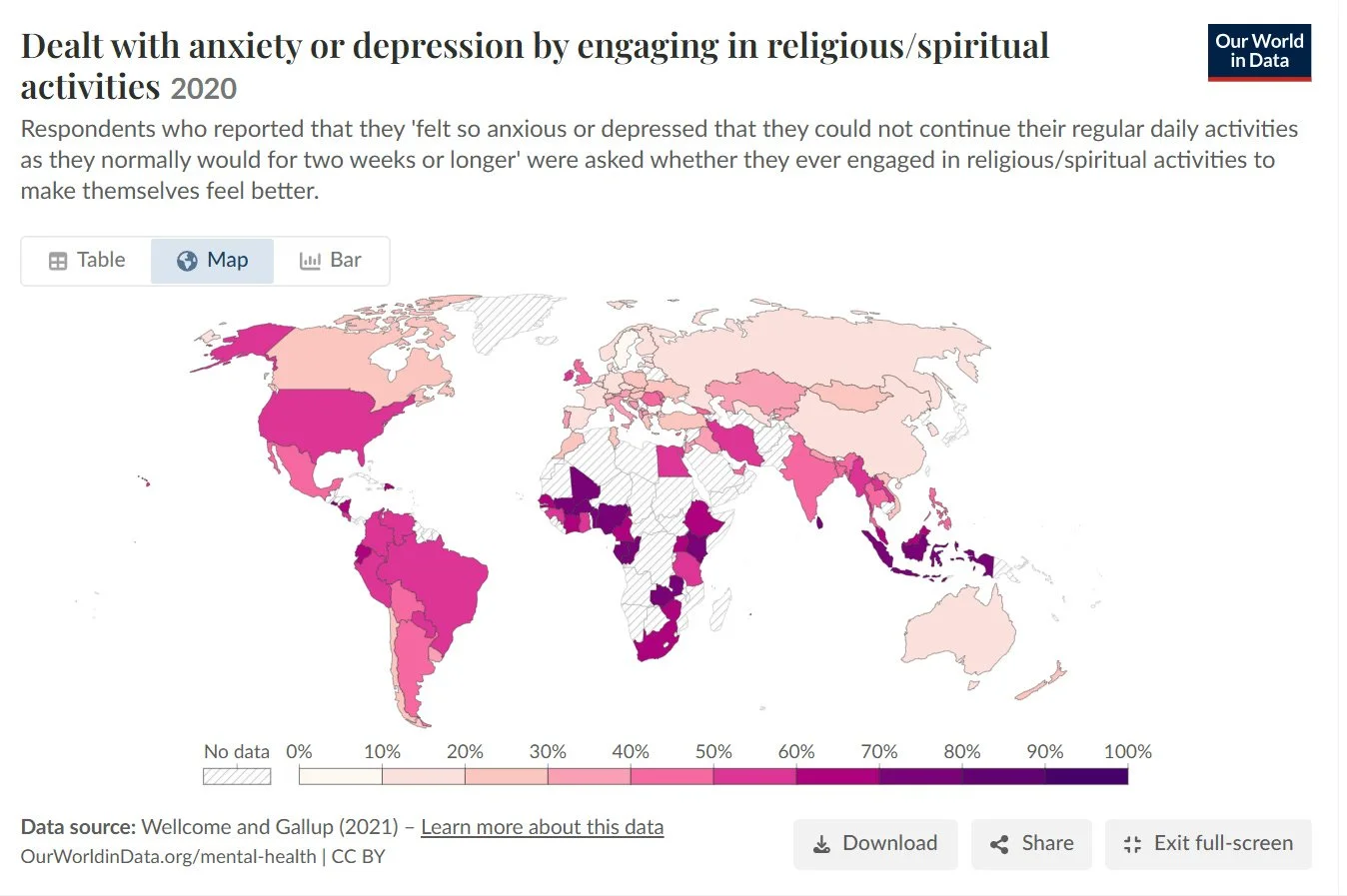
Dealt with anxiety or depression by engaging in religious/spiritual activities. Source: Our World in Data (CC BY)
Recent literature suggests that in many African LMIC settings, Pentecostal and other faith-based actors are often an important first place people turn when they are experiencing mental distress and spiritual explanations can play a major role. Potential problems include severe disorders being treated as solely spiritual problems, people being discouraged from seeking medical care, or a lack of safeguarding and regulation. Chaining is an especially graphic example of a cruel practice that is practiced in some religious healing centres. At the same time, help-seeking is often more mixed than that: people may also seek biomedical care, especially when it is accessible, affordable, and seen as trustworthy, and some Pentecostal settings show clear openness to professional mental health treatment. The main caveat is that the evidence base is still limited and quite context-specific. Much of the recent literature focuses on Africa and covers only some countries and locations, so it would be unwise to draw broad conclusions about all charismatic and Pentecostal traditions across all LMICs from this evidence alone.
Christian mental health organisations in the developing world
Several major Christian organisations are delivering mental health care in LMICs, though often with limited formal evaluation of cost-effectiveness:
CBM Global Disability Inclusion operates mental health programmes across Africa, Asia, and Latin America, partnering with WHO on QualityRights initiatives.
Tearfund provides psychosocial support and published educational resources on faith communities and mental health.
Christian Connections for International Health (CCIH), a global network of 125+ organisations in 90+ countries, is active on maternal mental health and community mental health.
These organisations have broad reach, but most have not been formally evaluated using the rigorous cost-effectiveness methods applied to charities like StrongMinds or Friendship Bench. A key priority for Christian effective giving is to encourage such evaluations.
Christian mental health organisations in the US and the UK
In higher-income countries, a growing number of Christian organisations are working to address mental health within faith communities, though their focus tends to differ from the clinical delivery models used in LMICs.
In the UK, Kintsugi Hope partners with over 300 churches and Christian charities to run 12-week wellbeing groups covering topics like anxiety, depression, loss, and resilience. Sanctuary Mental Health Ministries offers an eight-session course exploring mental health from psychological, social, and theological perspectives. Renew Wellbeing helps churches open café-style “quiet shared spaces” in partnership with local council mental health teams, operating in hundreds of churches across denominations.
In the US, the Mental Health Grace Alliance provides free evidence-informed workbooks and support groups combining neuroscience with biblical teaching, used by over 30,000 people across 58+ countries. Saddleback Church's Hope for Mental Health initiative, founded by Kay Warren after the death of her son Matthew who suffered from mental illness, has developed a replicable church-based mental health ministry model. NAMI FaithNet is an example of the mainstream mental health establishment reaching toward faith communities: it is an outreach network run by the National Alliance on Mental Illness that connects congregations of all traditions with mental health resources.
These organisations play an important role in reducing stigma, raising awareness, and providing peer support within church settings. However, their model is quite different from the scaled, clinically evaluated psychotherapy delivery of organisations like StrongMinds or Friendship Bench; most focus on education, community support, and signposting rather than structured therapeutic interventions; the Grace Alliance's curricula, which have published outcome research, are a partial exception. None, however, have undergone the kind of rigorous cost-effectiveness evaluation applied to the LMIC-focused charities recommended above.
Organisations
These are some organisations whose work we find promising. They employ evidence-based, scalable models, mostly in resource-constrained settings. This list is not exclusive.
Top Recommended Charities
Friendship Bench (Zimbabwe)
Friendship Bench is a community-based mental health programme that trains older women (“grandmothers”) to provide free, evidence-based talk therapy using a Cognitive Behavioural Therapy approach for anxiety and depression. Treating around 300,000 individuals annually. Nominated as a top recommended charity by the Happier Lives Institute, producing 49 WELLBYs per $1,000 invested.
StrongMinds (Uganda, Zambia)
StrongMinds provides free, community-based group interpersonal therapy to women with depression, treating over 426,000 individuals in 2024 (with a 2025 target of 580,000). Nominated as a top recommended charity by the Happier Lives Institute, producing 40 WELLBYs per $1,000 invested.
Vida Plena (Ecuador)
Vida Plena works to improve mental health in marginalised and low-income communities in Ecuador by training local community members to deliver Group Interpersonal Therapy. Founder Joy Bittner is a Christian (See the CFI podcast episode with Joy). Incubated by Charity Entrepreneurship.
The Happier Lives Institute
The Happier Lives Institute conducts rigorous cost-effectiveness research into charities and programmes in terms of their impact on wellbeing, including mental health charities. Their evaluations underpin many of the estimates in this report. See CFI’s podcast episode with Christian researcher Samuel Dupret from HLI.
Centre for Pesticide Suicide Prevention (CPSP)
CPSP is potentially the only global organisation dedicated to reducing suicide deaths from pesticides. CPSP collaborates with governments to implement restrictions on highly toxic pesticides and has been positively evaluated by GiveWell.
Other Promising Organisations
Kaya Guides (India)
Kaya Guides provides a WhatsApp-based guided self-help programme to reduce depression among youth in India and other LMICs. Incubated by Charity Entrepreneurship.
Canopie (USA/Global)
Canopie delivers digital mental health programmes for perinatal mental health. Currently US-based, but the model could inform LMIC adaptations. Incubated by Charity Entrepreneurship.
Shamiri Institute (Kenya)
Shamiri Institute delivers brief character strength and growth mindset interventions to adolescents in schools, serving approximately 100,000 students annually. Studied in several RCTs, though cost-effectiveness has not yet been formally evaluated.
Sangath (India)
Sangath is a research-to-practice organisation led by global mental health leaders that develops and trials low-cost mental health interventions, often delivered by non-specialists.
Pure Earth
Pure Earth works to identify and remediate lead and toxic pollution in low- and middle-income countries through research, targeted exposure-reduction programs, and policy advocacy, addressing one of the most neglected drivers of cognitive damage and mental health burden globally.
Overcome
Overcome: Overcome is a UK-registered global charity that provides free, one-to-one mental health coaching via weekly video calls (for up to 12 weeks) with trained volunteer coaches, targeting common issues like depression, anxiety, stress, and unhealthy habits for anyone worldwide.
Career Paths in Global Mental Health
Direct Delivery and Programme Management
Working at organisations like StrongMinds, Friendship Bench, Vida Plena, or similar charities to scale the delivery of evidence-based psychotherapy in LMICs. Roles in programme management, operations, training, and community engagement are particularly valuable. For Christians, Vida Plena (whose founder is a Christian) represents an opportunity to combine faith commitments with evidence-based practice.
The Probably Good job board features roles from impactful mental health organisations.
However, we want to be upfront that there are not many open positions in effective mental health organisations and of the positions that exist, many are in the organisations’ target countries instead of the UK or the US.
See CFI podcast episode with Vida Plena’s founder Joy Bittner here.
Research
There is a critical need for more research, particularly cost-effectiveness analysis, implementation science, clinical trials in LMICs, and scalable treatments for substance-use disorders and severe mental illnesses such as schizophrenia and bipolar disorder. Academic positions or research roles at organisations like the Happier Lives Institute or Sangath can be highly impactful.
See CFI podcast episode with researcher Samuel Dupret here.
Policy and Advocacy
Working in government, international organisations (such as WHO or World Bank), or advocacy organisations to push for increased mental health funding, integration of mental health into primary care systems, and evidence-based regulation (such as pesticide restrictions). This is a particularly good fit for readers with expertise in health policy, public health, or international development.
Effective Giving
Donating to the most effective mental health organisations. Given the extreme neglectedness of global mental health funding, marginal donations can be disproportionately impactful. This path can be combined with advocacy and awareness-raising within one’s professional and church communities.
Church and Mission Leadership
Those in church leadership positions or mission contexts may have opportunities to improve mental health awareness, reduce stigma, provide pastoral and community support, and partner with mental health organisations to expand access to evidence-based care. In some settings, churches could also host or support community mental health programmes delivered by appropriately trained providers.
Evidence Base
Our analysis and recommendations in this report draw primarily from the following sources:
The Bloom Global Mental Health Report 2025 (Bloom Wellbeing Fund, research by the Happier Lives Institute). This is the most comprehensive recent report on global mental health from an effective giving perspective. We have drawn heavily from it for our sections on scale, neglectedness, and solutions.
The Happier Lives Institute’s cost-effectiveness analyses, which use meta-analyses of psychotherapy studies in LMICs (including over 100 RCTs for psychotherapy) to estimate WELLBYs per dollar.
World Health Organisation data and publications, including the Mental Health Atlas and the Global Burden of Disease study from IHME.
The Lancet Commission on Global Mental Health (2018) and related Lancet Psychiatry analyses of the global burden of disease, which inform our estimates of scale, economic cost, and the structural drivers of rising mental ill-health.
Cuijpers et al. (2024), a meta-analysis of 441 trials establishing the effectiveness of psychotherapy across mental disorders.
GiveWell's evaluation of the Centre for Pesticide Suicide Prevention.
Chapter 8 of the 2025 World Happiness Report (Plant et al., 2025), which provides a framework for comparing the cost-effectiveness of wellbeing interventions.
The Disease Control Priorities project (DCP3) and WHO-CHOICE analyses (Chisholm & Saxena, 2012) for DALY-based cost-effectiveness estimates.
As with all of our reports, we believe in an evidence-based approach to charity, which lets donors be confident that their money is as effective as possible in helping the people they want to serve.
Conclusion
Global mental health is a big, harmful, and neglected problem. Mental health conditions affect over a billion people worldwide, can cause suffering that rivals or exceeds most other life adversities, contribute to suicides, and impose an enormous burden on families and communities. Yet mental health receives only 0.5% of international health aid, a fraction of what its disease burden would justify.
The good news is that effective, affordable, and scalable solutions already exist for many of the most common conditions. Community-delivered psychotherapy for depression and anxiety can be provided for less than $50 per person and produces 40–49 WELLBYs per $1,000 invested. Restricting access to lethal pesticides is effective in preventing suicides.
Scripture is full of descriptions of mental distress and calls us to compassionate action for the suffering. The challenge is not simply a lack of knowledge about what works. It is a lack of investment and implementation. We invite our readers to consider how they can contribute – especially through their giving and careers, but also through their churches and communities – to closing the gap between what is known and what is done for the hundreds of millions of people around the world suffering with mental health conditions.