Homelessness (UK & US) – Summary Report
31 March 2026
Vesa Hautala
Rarely recommended
What is this problem?
Scale
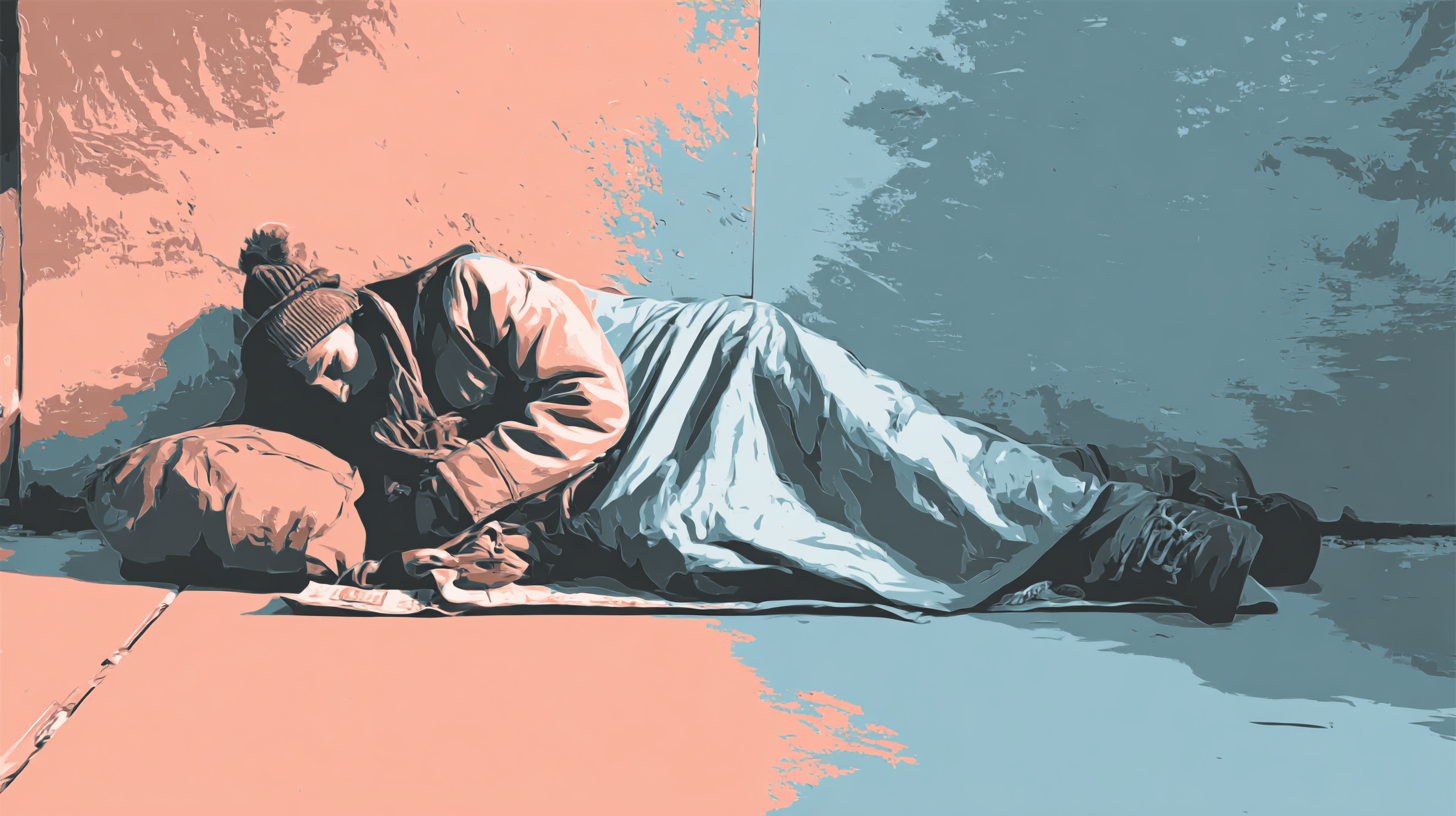
On a single night in January 2024, approximately 771,480 people were experiencing homelessness in the United States
This is the highest figure on record
The number included nearly 150,000 children.
In England, 132,410 households were living in temporary accommodation as of June 2025,
this is also a record number
there were over 172,000 children among these households
These numbers are rising sharply in both countries.
Severity
- People experiencing homelessness die on average 30 years younger than the general population. They suffer from significantly higher rates of mental illness, substance use disorders, and chronic physical conditions, including tuberculosis, HIV, and cardiovascular disease.
-
Rough sleepers (people who are homeless and sleep without adequate shelter, typically on the streets) are 17 times more likely to be victims of violence than the general public.
- Women experiencing homelessness face particularly acute risks, with high rates of sexual violence and exploitation.
Tractability
Housing First, a model providing stable housing immediately without requiring sobriety or treatment compliance, is backed by multiple randomised controlled trials and has helped cut US veteran homelessness nearly in half since 2010 along with other services produced by the Office of Veteran Affairs.
However, the cost of saving and improving lives through homelessness interventions in the UK and the US is likely orders of magnitude more expensive than through the most effective global health interventions in low- and middle-income countries.
Neglectedness
The US federal government budget for 2025 targeted more than $10 billion across all homelessness assistance programmes. (HUD, VA, HHS, DOJ, Education, etc.) State and local governments had substantial additional spending.
The UK Government allocated nearly £1 billion in dedicated homelessness and rough sleeping grants for 2025-26. Local authorities in England spent £3.8 billion tackling homelessness in 2024/25.
In comparison, the global development spending of OECD’s Development Assistance Committee (DAC) member countries was $214.5 billion – the DAC members are the major providers of Official Development Assistance (ODA).
Given that there are some 700,000,000 people living in extreme poverty, this comes to $364 per person. The US federal funding for homelessness alone comes to about $13,000 or more per person using the figures mentioned above.
Our overall view
Homelessness in wealthy countries is not neglected in the way our top-priority cause areas are, and the cost-effectiveness of interventions is likely significantly lower than for global health and poverty programmes in low- and middle-income countries.
People with skills in housing policy, social work, advocacy, or urban planning, are the best placed to contribute.
What are the most effective interventions?
Housing First is supported by multiple RCTs in the US and Canada. The landmark At Home/Chez Soi trial found that participants spent 73% of their time in stable housing compared to 32% for the control group.
The US Department of Veteran Affairs (VA) programmes demonstrate that sustained, targeted investment can achieve serious reduction in homelessness: the VA homeless programs, including HUD-VASH and Supportive Services for Veteran Families (SSVF), have been instrumental in the nearly 50% reduction in veteran homelessness since 2010.
The HUD-VASH is a joint program between the Department of Housing and Urban Development (HUD) and the Department of Veterans Affairs (VA) that combines rental assistance vouchers with case management and clinical services for homeless veterans.
However, there are almost no formal studies measuring homelessness interventions in QALYs (quality-adjusted life years), the standard measure used for global health cost-effectiveness comparisons. The few estimates that exist suggest homelessness interventions costs of $26,800 or $22,700 per QALY gained, compared to ~$30–200 per DALY (disability-adjusted life years, a similar measure) averted for GiveWell's top LMIC health interventions.
This gap is partly because QALYs don't capture the full non-health value of stable housing, but the end result is that the marginal dollar almost certainly goes much further in global health.
Christian perspectives
Biblical themes
The Bible speaks extensively to the duty to shelter the vulnerable. Isaiah 58:7 ties true worship directly to providing shelter for the poor. Deuteronomy 15:11 commands openhandedness toward those in need.
Jesus himself lived without a settled home during his ministry (Luke 9:58) and He identifies Himself with those who lack basic necessities: “I was a stranger and you invited me in… whatever you did for one of the least of these brothers and sisters of mine, you did for me” (Matthew 25:35–40).
Hebrews 13:2 calls Christians not to forget hospitality to strangers.
More broadly, the Law and the Prophets repeatedly place responsibility for protecting the vulnerable on the wider community and on those with social and political power, not only on the individual in need.
Christians Past and Present
The Roman Catholic tradition identifies “sheltering the homeless” as one of the seven corporal works of mercy, drawn from Matthew 25. Monastic communities maintained hospices and guest houses for the destitute from the early medieval period onward.
Churches remain among the largest providers of emergency shelter in both the UK and the US today, through parish night shelters, organisations like the Salvation Army, Catholic Charities, and Housing Justice.
Christians should be cautious about approaches that treat homelessness primarily as a moral failing. The biblical witness focuses on systemic obligation, and many people experiencing homelessness face mental health conditions and other challenges that severely affect their circumstances. At the same time, individual agency should not be downplayed and people’s responsibility and free will should be recognized even when they make choices that are bad for them.
What are common theological arguments against it being pressing?
While not exactly a common argument, many impact-oriented Christians think that global poverty and preventable diseases should take priority because the same sum of money goes dramatically further in low-income countries than in the UK or US.
Some Christians worry that homelessness ministry or other social-action efforts can drift into mere social service and crowd out the church’s evangelistic mission. In response, Christians can pursue both spiritual and material care, and evidence-based approaches do not require abandoning a holistic vision of human flourishing.
Top ways to make an impact
Use your career: Housing policy and advocacy roles at organisations like Crisis, Shelter, National Alliance to End Homelessness, or within local government can help close the gap between evidence and practice. Research roles can address major evidence gaps, particularly around prevention, family homelessness, and cost-effectiveness.
Affordable housing development: Christians with skills in housing development, urban planning, finance, or construction can work to expand the supply of social and affordable housing — addressing the root cause of the crisis.
Give effectively: Unlike CFI's top recommended cause areas, homelessness in wealthy countries is expensive to address per person helped. If your primary goal is to maximise impact per pound or dollar, our global poverty and preventable diseases recommendations will likely go further. But for donors with a particular calling to homelessness, supporting organisations that implement evidence-based programmes (especially Housing First and prevention services) could be the best use of funds.
Pray for people experiencing homelessness and for the political will to implement solutions that we already know work.
Advocate for evidence-based housing policies in your community and church — and be cautious about well-intentioned approaches that may not reflect the best evidence.
Sources for the Severity section
Crisis UK, Homelessness Kills (2012) https://www.crisis.org.uk/ending-homelessness/homelessness-knowledge-hub/health-and-wellbeing/homelessness-kills-2012/
Crisis UK, Homelessness: A Silent Killer (2011) https://www.crisis.org.uk/ending-homelessness/homelessness-knowledge-hub/health-and-wellbeing/homelessness-a-silent-killer-2011/
Homeless Link, Unhealthy State of Homelessness 2022 https://homeless.org.uk/knowledge-hub/unhealthy-state-of-homelessness-2022-findings-from-the-homeless-health-needs-audit/
Homeless Link, Health and Homelessness overview page https://homeless.org.uk/areas-of-expertise/health-and-homelessness/